
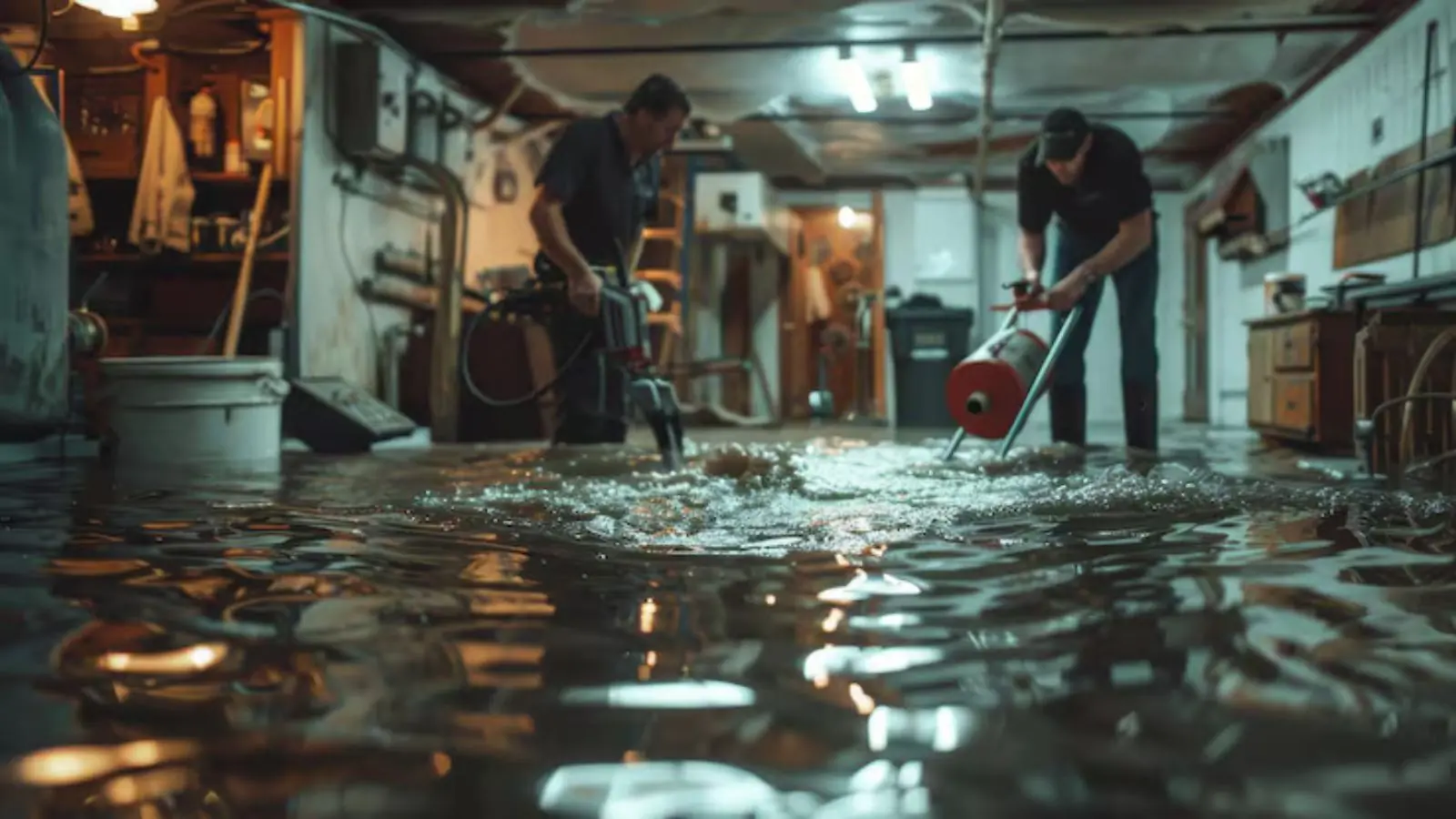
Standing water in the house: start here
If water is on your floor right now, you are in the right place, and we are open 24/7. While you wait, shut off the main water valve, stop any fixture that is still running, and lift rugs, shoes and small valuables off the wet floor. Keep children and pets out of the water.
Emergency water removal means pumps and extraction units pull standing water out of the structure, so it stops soaking into drywall, cabinets and subfloor. It is the first hands-on step, ahead of cleanup and repair.
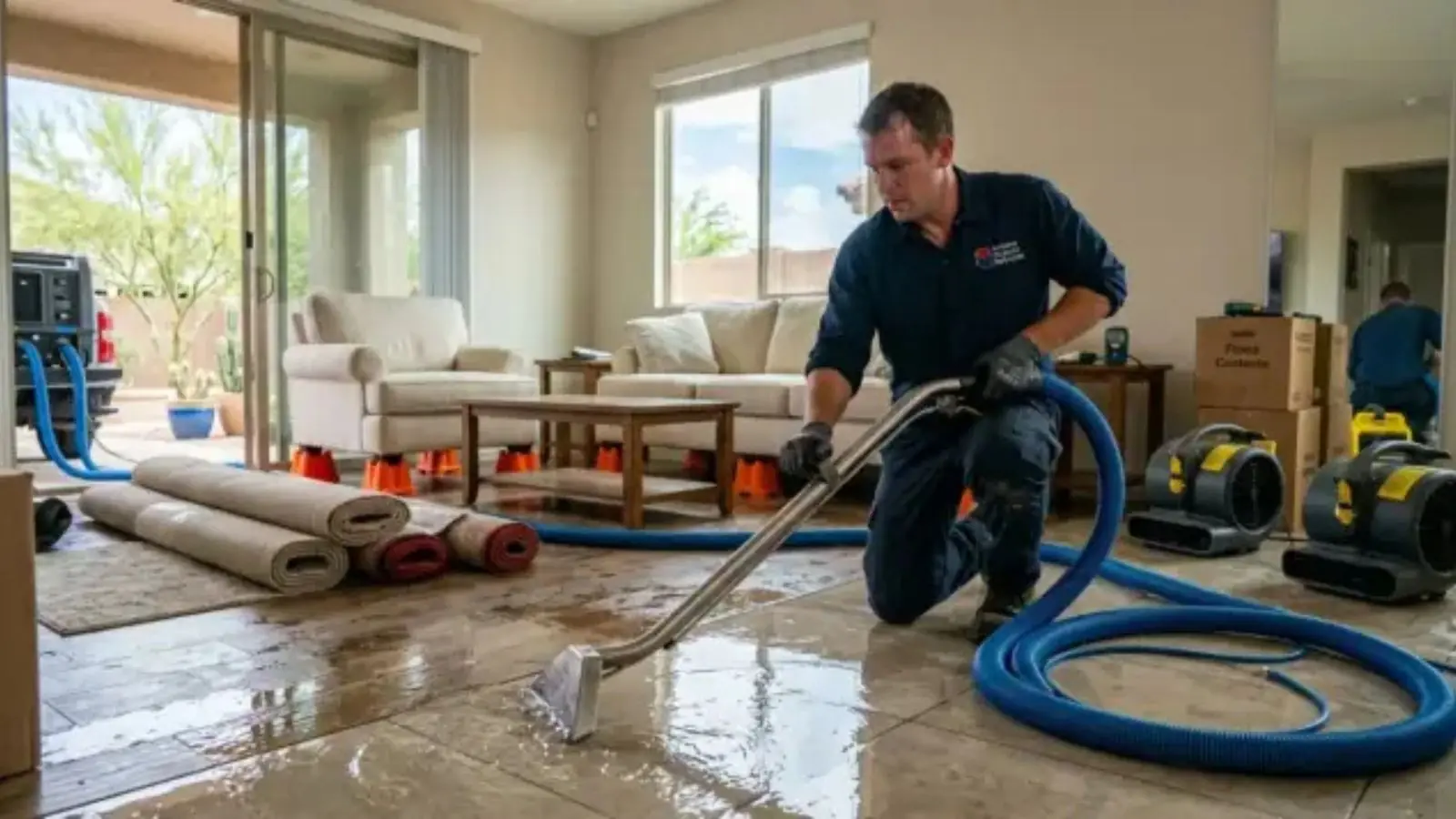
When standing water is an emergency
Treat it as urgent when the water is more than a puddle, when it keeps coming, or when it reaches anything electrical. Water under flooring, water inside a ceiling cavity and any water that smells like a drain all qualify. Wet carpet pad holds water like a sponge and walks it across the room.
A ceiling that sags or has already dropped is carrying water above it, and the fallen board and insulation have to be cleared before pumps can reach the floor. Roof leaks do the same thing slowly. After-hours calls reach the same dispatch line as daytime ones, and same-day response is offered when available, so do not wait for morning if the source is still running.
Where standing water comes from in La Quinta
Most homes here were built after the city incorporated in 1982, so many original water heaters, supply lines and washer hoses are 20 to 35 years old. The U.S. A tank water heater is generally designed for about 10 to 15 years, according to the Department of Energy, and older tanks fail with little warning. Replace tanks and braided hoses before they split, not after.
Seasonal residents add another risk. When a house sits empty through the summer, a failure can run for days. A closed shutoff valve, a leak sensor and a neighbor who checks in cost little next to a flooded floor.
Storms are rare but sharp. A normal year brings under 4 inches, yet Tropical Storm Hilary in August 2023 put 3.82 inches on Palm Desert in two days. Hard, dry ground sheds that water as runoff toward doors and garages, and storm water that enters from outside falls under flood damage restoration.
Signs the water is deeper than it looks
What you see on the surface is the smaller part of the problem. The rest hides in baseboards, wall cavities, under cabinets and below flooring. Check for these:
- Baseboards that darken or swell at the bottom edge
- Paint or wallpaper bubbling well above the floor line
- A floor that feels spongy or sounds hollow underfoot
- Ceiling stains that spread, sag or drip
- Water collecting in a crawl space, or along the slab edge in a garage
How pumps and extraction units pull water out
A submersible pump takes the deep water first. When the level drops to a film, portable or truck-mounted extraction units draw water from carpet, pad and hard flooring. Moisture meters then show what the surface hides, and a thermal imaging camera finds wet areas behind walls.
Extraction removes the bulk. Drying the structure is the next job, with air movers and LGR dehumidifiers, and that belongs to water mitigation. Crews should work to ANSI/IICRC S500, the published standard for water damage, and you can ask any company whether theirs do.
Electrical and sewage safety before you step in
If water touches an electrical panel, outlets or anything plugged in, stay out. Cut power only if the panel is dry and you can reach it without stepping through water. For any electrical or gas risk, call your utility or 911 first, then call (760) 769-1159.
Water from a drain, toilet or sewer line is Category 3, black water. Do not wade in it, touch it or run fans through it. Keep people and pets away and wait for a crew.
Pump, wet vac or wait: the honest trade-offs
A shop vacuum handles a spill on tile. It will not keep up with a flooded room, and it should never be run in standing water near live outlets. A rented pump helps with depth but does nothing for pad, toe kicks or wall cavities.
Waiting on the utility rarely helps, because it stops at the meter and the water inside the home is yours to manage. If the source is stopped and the water is clean and shallow, towels and a squeegee are a fair start.
If it is deep, spreading or dirty, call. If your home has a crawl space, water pooling there needs pumping as well, and the access hatch is often in a closet or the garage.
Burst Pipe Water Damage
A burst pipe floods fast, so the first move is the main shutoff. Turn the main valve clockwise until it stops. If you cannot find it, read your water bill to see which utility serves your address and ask them where the shutoff sits. Then open a faucet at the lowest point in the house to drain the lines.
Next, work out which fixture failed, because that tells you where the water went. The usual culprits are the supply line under a sink, a washer hose or valve that has let go, and a water heater that has split. Under-sink lines often fail overnight and fill cabinets and toe kicks.
A washer valve break sends water through the laundry room and into the hall. A water heater leak in a garage or closet runs along the slab to the nearest door.
Many fixtures have their own small stop valve, and closing it may hold you until help arrives.
Document before you move anything. Take photos and short video of the source, the water line on walls and every damaged item, and keep the broken part, since a plumber or your insurer may want to see it. Write down the time you found it.
What affects the price of water removal
Pricing is set on the job in front of the crew, because depth, floor type and water category change the work.
| Cost factor | How it changes the job | What to tell the dispatcher |
|---|---|---|
| Water category | Category 1 clean water, Category 2 gray water and Category 3 black water call for different handling and disposal | The source of the water |
| Affected area | More square footage means more extraction time and more drying equipment | Which rooms are wet |
| Materials involved | Carpet and pad, hardwood, tile and cabinets each respond differently | Floor and cabinet types |
| Drying days and equipment | Deep or spread water needs more air movers and dehumidifiers for longer | How long it has been sitting |
| Rebuild scope | Wet drywall and insulation may need to come out before any repair starts | Any sagging or soft areas |
How the price conversation works
Want your real number? Call (760) 769-1159 and describe the room. Scope and price are explained before work starts, and no figure is quoted for a loss nobody has seen.
Insurance and standing water
Many policies draw the line between an event that happened suddenly and damage that built up over time. According to the California Department of Insurance, standard homeowners policies do not cover flood, and flood coverage is a separate policy that generally takes effect 30 days after purchase. Check your policy or ask your insurer before the storm, not after.
Photos of the water, the source and the damage help any claim.
Dispatch to La Quinta, night and day
We send crews around the clock to The Village, Old Town, PGA West, SilverRock and Griffin Ranch, and to Indio and Indian Wells nearby. Licensed and insured, with after-hours calls handled the same as daytime ones. Once the water is out, water damage cleanup is the next step.
Questions we hear from La Quinta homeowners
Do you handle water removal emergencies at night or on weekends in La Quinta?
Yes. The line is open 24/7, including nights, weekends and holidays. A dispatcher asks what the water is doing, whether the source is stopped and whether electrics are involved, then sends a crew with same-day response when available. No arrival time is promised, because it depends on call volume and road conditions. In the meantime, shut off the main and lift valuables off the floor.
How much notice do you need before you can remove the water?
None. There is no appointment to book for active water. Call as soon as you see it, describe what happened and let the dispatcher work out the next steps with you.
Can someone just come look at the water before I decide?
Yes. A crew checks the water with moisture meters and a thermal imaging camera, explains what they found and sets out the scope and price before any work starts. Looking does not commit you to anything.
Is it safe to use a shop vacuum on standing water?
Only a vacuum rated for wet pickup, and never where water is near outlets, cords or a panel. A standard household vacuum should not touch water at all. For anything deeper than a spill, a pump and extraction unit are the right tools.
Does standing water mean I will get mold?
Mold needs moisture. EPA guidance says drying wet materials within 24 to 48 hours usually prevents growth, which is why quick extraction matters. If growth is already visible, see mold remediation. Health questions belong with a physician.
Can you pump out water in a crawl space or garage?
Yes, when it is safe to reach. Crawl spaces and garage slab edges are common places for water to collect after a pipe failure or a storm. Restoration is not waterproofing. If water keeps entering from outside the home, a waterproofing or foundation contractor handles that.
Water still spreading? The line is open 24/7.
Call (760) 769-1159