
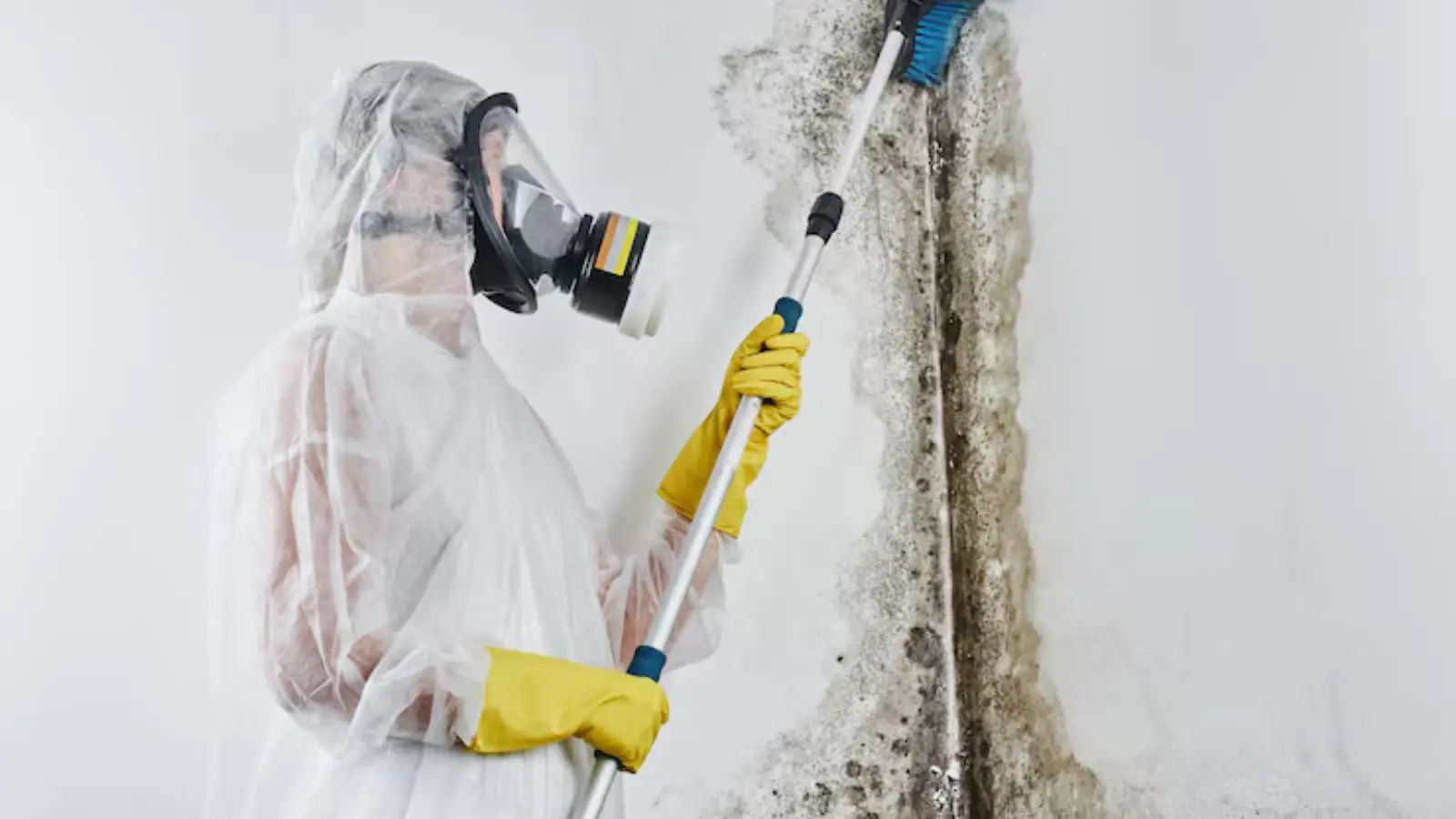
What mold remediation means for a La Quinta home
Mold remediation is the controlled removal of mold growth and the materials it has taken hold of, carried out after the moisture problem is found. The work follows ANSI/IICRC S520, a published industry standard covering containment, cleaning, removal and checking. It is not a spray and a wipe.
This page is for owners who had a leak, a wet closet or a damp cabinet and are now looking at spots they did not expect. If water is still present, water mitigation comes first.
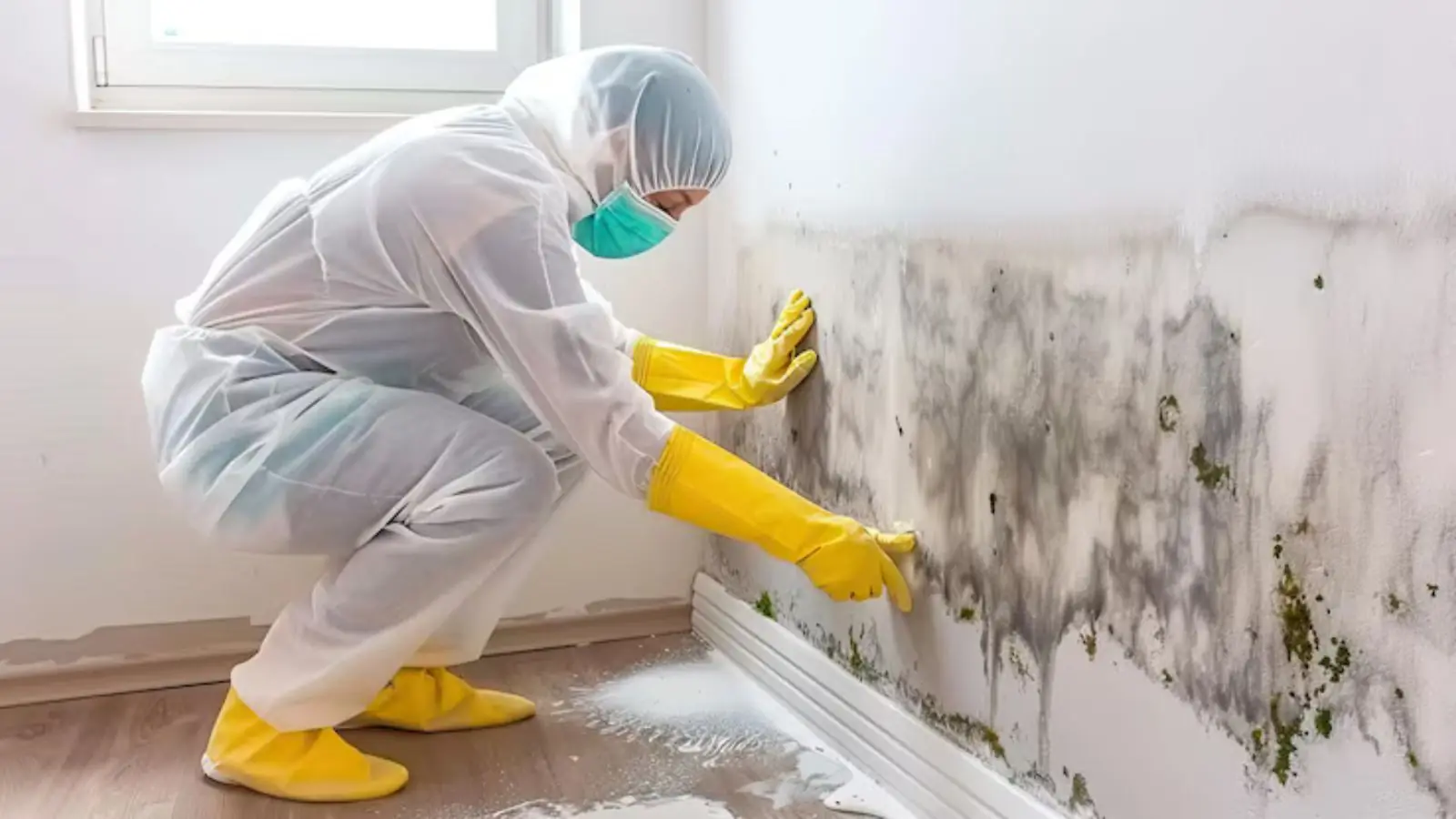
There are dark spots on my wall after a leak, what now?
Stop the water, leave the spots alone, and close the door to keep the area separate from the rest of the house. Color alone does not tell you what the growth is, so what matters is where the water came from, how much area is involved and what it soaked into. Mold remediation is the trade that finds all three and deals with them in order.
Where mold starts in La Quinta homes
Summer afternoons regularly top 100 degrees, so air conditioners run for months and produce a steady stream of condensate. When the drain line clogs, that water spills in the attic or in the closet housing the air handler. The closet case is a classic. Carpet edges wick the water, the bottom of the drywall stays damp, and the first sign is a stain or a smell on a wall nobody looked at for weeks.
The other repeat offender is the sink cabinet. A weeping supply line or drain trap leaks a little at a time, the cabinet floor and back panel stay damp, and nobody knows until the cabinet is emptied. Many La Quinta homes sit empty for part of the year, which gives a slow leak weeks to work. Check under sinks and inside the AC closet whenever you return, and put a leak sensor in both places.
Signs that moisture has been sitting
You do not need a lab to know a wall has been wet. Staining, bubbling paint, warped baseboards and a persistent damp smell all point to moisture, and moisture is what drives the whole problem.
- A stain that grows on hot days when the air conditioner runs
- Soft or swollen drywall at the bottom of a closet wall
- Carpet edges that feel damp, or tack strips that have rusted
- A cabinet floor that has swollen or begun to peel
- Visible fuzzy or speckled growth in a line or a cluster
How assessment works and where do-it-yourself stops
A crew starts with moisture meters and a thermal imaging camera to map the wet area, then looks at the visible growth and the materials behind it. The plan comes from that map: what is contained, what is cleaned and what is cut out.
EPA guidance says homeowners can often clean hard surfaces when the area is small, under about 10 square feet, and that larger areas call for professionals. EPA does not recommend routine use of bleach as a biocide, and bleach must never be mixed with ammonia. Growth in porous materials like drywall or carpet pad usually means removal, not cleaning. Questions about how mold may affect a person belong with a physician.
Mold Removal and Black Mold Cleanup
The word black pulls a lot of searches, but color alone says little about what a mold is. Color does not identify a mold. Growth that looks black, green, white or gray goes through the same process, and only laboratory analysis can name a species. The useful questions are how far the growth reaches and what material it sits on.
The work follows a set order. The crew seals the area with containment barriers, so dust stays out of the rest of the house. Negative air machines pull air out through filters, keeping pressure inside the containment lower than outside. HEPA air scrubbers capture fine particles while the work goes on.
Porous materials that carry growth, such as drywall, insulation, carpet and pad, are cut out, bagged and removed, because cleaning cannot reach what has grown through them. Framing and other hard surfaces are HEPA vacuumed, wiped and dried. Ask whether your state licenses mold work, and ask any contractor to explain how their process follows S520.
Mold After Water Damage
EPA guidance says mold needs moisture and that drying wet materials within 24 to 48 hours usually prevents growth. That window is why a leak caught and dried fast rarely ends up on this page. The one that sat through a weekend, a trip or an unnoticed week is the one that does.
If the water is recent, the right call is water mitigation, not mold work. Extraction, air movers and LGR dehumidifiers dry the structure, and readings confirm it before anything is closed up. Fast drying is the best way to avoid needing remediation at all.
If drying came late, or a wall stayed wet for days, have the cavity inspected before anyone rebuilds, since closing drywall over damp framing hides the problem. After remediation and clearance, the rebuild is its own job, described under water damage repair. Keep dated photos of the damage and the drying readings, since a buyer, an insurer or a lender may ask for them later.
Mold Testing, Inspection and Clearance
An inspection looks at where the moisture came from, how far it traveled and what is affected. Testing, where it is used, means air or surface samples analyzed by a laboratory. Clearance testing is the final check after removal, and it is best done by an independent tester who does not work for the remediation company, so the person grading the job is not the person who did it.
Real-estate deals raise this often. A buyer's lender may refuse to fund until mold is removed, and the sale stalls until documented clearance exists. We make no promise about what any lender will accept, so ask the lender what paperwork it wants before the work starts. Fixing a drain line or supply line comes first, since a dry cavity is what lets the rest of the work hold.
The order that holds up is simple: fix the leak, remediate, then clear. Remediating a wall while a drain line still drips only resets the clock, and a clearance result taken before the source is fixed tells you little.
What shapes the scope and price of mold work
Mold jobs vary more than most, since the visible spot is rarely the whole job. Size, material and how long the moisture sat set the work.
| Cost factor | How it changes the job | What to tell the dispatcher |
|---|---|---|
| Water category | Category 1 clean water, Category 2 gray water or Category 3 black water affects how the area is handled | What the original water was |
| Affected area | Larger areas need bigger containment and more removal | Rooms and rough size of the patch |
| Materials involved | Drywall, carpet and insulation are removed, framing is cleaned | What the growth is on |
| Drying days and equipment | Wet structure must dry before and after the work | How long it has been damp |
| Rebuild scope | Removed drywall, trim and flooring need replacing afterward | If a sale or a lender is involved |
How the inspection and price conversation works
The first conversation covers what is wet, what is affected and what has to be contained. The method for pricing a mold job is explained up front, and a number only follows a look at the actual wall. Want your real number? Call (760) 769-1159 and describe the room, the material and what caused the water.
Insurance notes and serving La Quinta
Sudden and accidental water damage is often covered, while gradual leaks and neglect often are not, and mold that follows a slow leak can fall on the wrong side of that line. Flood damage is usually excluded. Check your policy or ask your insurer how your loss is classified before work begins.
We serve La Quinta from The Village to Griffin Ranch and PGA West, and nearby from Palm Desert. Licensed and insured crews respond the same day when one is available. Many callers ask first whether someone can just look at it, and the answer is yes, call (760) 769-1159.
Questions we hear from La Quinta homeowners
There are dark spots in my closet after the AC leaked. Is it mold and what should I do?
Color cannot tell you, and a contractor cannot diagnose from a description. What you can do is stop the leak, keep the closet closed off, and avoid scrubbing, sanding or running fans at it. Call and describe the size of the area and the material. A crew can read the moisture and explain the scope.
My buyer's lender will not fund until the mold is removed. What do I do?
Ask the lender exactly what documentation it requires before any work starts. We can remediate and arrange the scope, but we make no promise about what any lender will accept. The order is fix the leak, remediate, then get independent clearance. Keep every report and receipt for the file.
What is clearance testing and who should do it?
Clearance testing is the final check, after removal, that the work area meets the target set for the job. It is best done by an independent tester who has no stake in the remediation. Ask the tester what they sample and what standard they compare against before you hire them.
Can I clean mold myself with bleach?
For a small hard surface, under about 10 square feet, EPA says homeowners can often clean it themselves. EPA does not recommend routine use of bleach as a biocide, and bleach must never be mixed with ammonia. Porous materials and larger areas call for professionals. Health questions belong with a physician.
Does a mold remediation company need a license?
Ask whether your state licenses mold work, and ask any contractor to show how they meet it. Also ask whether their process follows S520, the published industry standard. We are licensed and insured.
Does remediation fix the cause or just remove the mold?
Remediation removes growth and the affected materials. The cause is moisture, so the source must be fixed too, whether that is an AC drain, a supply line or a roof leak. Restoration is not waterproofing. A waterproofing or foundation contractor handles water entering from outside.
Water still spreading? The line is open 24/7.
Call (760) 769-1159