
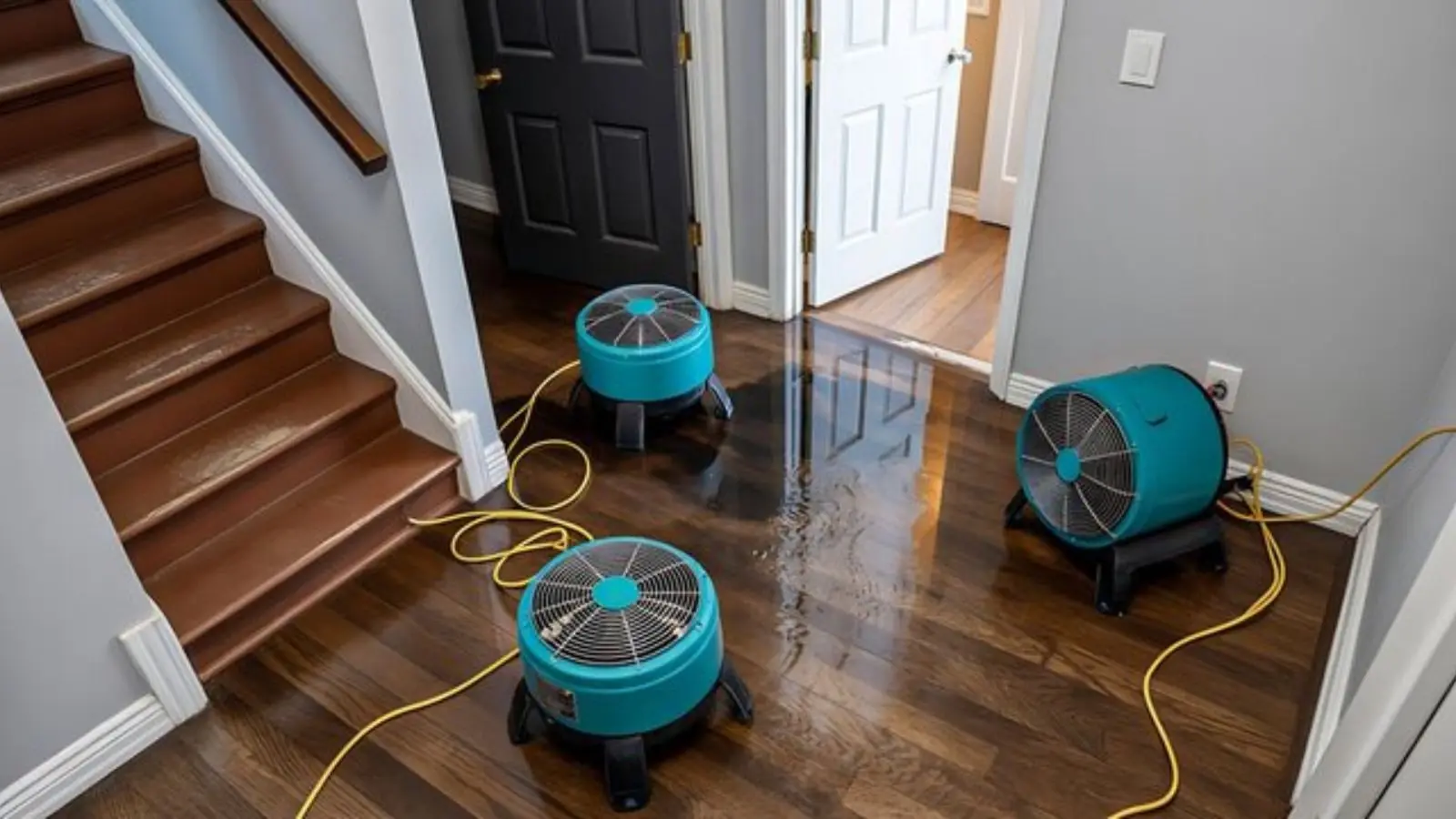
What water mitigation means for a La Quinta home
If water is moving through your house right now, we are open 24/7 and you can call (760) 769-1159 while you work through the first steps. Shut off the main water valve if a supply line let go, lift anything valuable off wet floors, and keep people and pets away from standing water.
Water mitigation is the work that stops a water loss from spreading. It means finding and stopping the source, pulling out standing water, and setting up drying so framing and subfloor do not stay wet. Repair comes later, and the first 24 to 72 hours decide how much of it you will need.
My wall is wet and the floor is damp, what now?
A cool, damp wall, a baseboard that has started to swell or carpet that squishes near a closet usually means water is already inside the wall or floor. Stop what you can reach, like a washer valve or the main shutoff, and write down where it feels wet. The published ANSI/IICRC S500 standard is the reference for how this drying is defined and verified, and you can ask any company whether its crews work to it.
What you need is mitigation, which tracks the moisture to where it actually went and dries it on purpose. A wet-looking spot is often the small end of a bigger problem, so call (760) 769-1159 and describe what you see.
Where the water comes from in La Quinta houses
Summer afternoons here regularly top 100 degrees, so air conditioners run for months. Condensate drain lines and AC closets become a leading source of hidden water, which means a damp ceiling or a wet closet floor deserves a look before it gets worse.
Most La Quinta homes date from the 1990s onward, since the city was incorporated in 1982 and the Census count grew from about 11,200 in 1990 to 37,500 in 2010. Original supply lines, water heaters and roof flashing are now 20 to 35 years old. The Department of Energy puts storage tank water heaters at about 10 to 15 years, so an old tank is worth replacing before it fails.
Many houses also sit empty for part of the year. A leak in an unoccupied home can run for days, so a shutoff valve, a leak sensor or a neighbor who checks in can save a floor.
Signs the water is still working
Moisture settles behind finishes where nobody looks.
- Paint that bubbles or drywall that feels soft near the bottom edge
- Hardwood or laminate that cups at the edges or lifts at the seams
- A musty smell in a room that looked dry yesterday
- A ceiling stain that grows after the AC has been running
- Warm, humid air in one room while the rest of the house feels normal
How a crew stops the damage
The crew starts by finding and stopping the source, then removes standing water with extraction units. Moisture meters and thermal imaging cameras show which walls, floors and ceilings are wet, even where the surface looks fine.
Wet material that cannot be saved, like soaked carpet pad, comes out so it is not left to hold water against the structure. If the water was contaminated, water damage cleanup handles sanitizing before drying begins.
Structural Drying
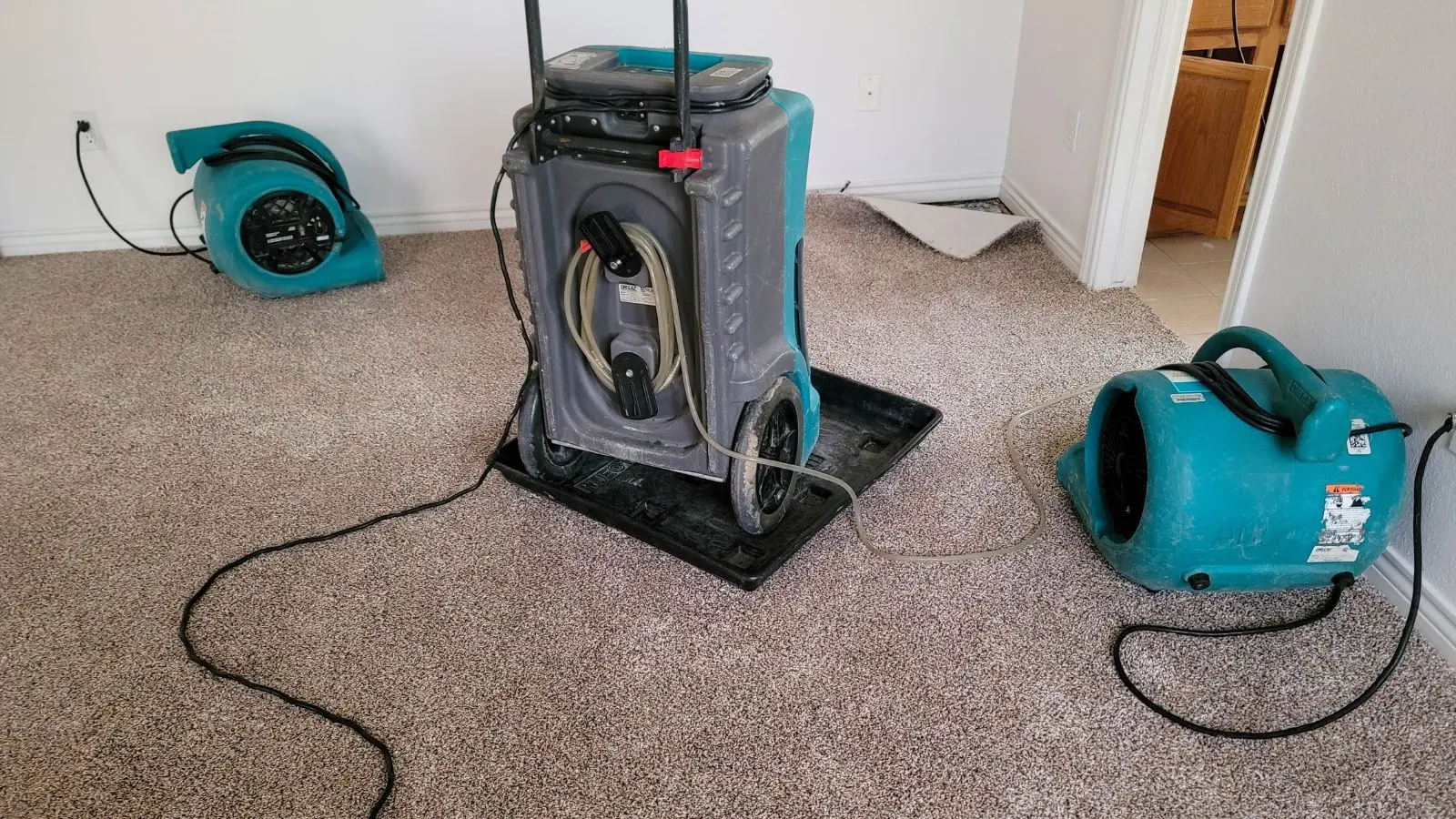
The goal of structural drying is simple. Bring wet framing, subfloor and drywall back to their normal moisture level before anything gets closed up. Air movers push dry air across wet surfaces to pull moisture out, and LGR dehumidifiers remove that moisture from the air so it does not settle somewhere else.
Before equipment goes in, the technician maps the moisture. Readings are logged at set points on walls and floors, and the same points are read again each visit. Falling numbers mean drying is working, and flat numbers mean equipment needs to move or another wet pocket is hiding.
How long drying takes depends on the materials. Thin drywall releases water faster than thick hardwood, concrete slabs and framing hold it far longer, and a dense subfloor under tile can stay wet after the surface feels dry. Drying ends when the readings match a dry reference, not when the room feels comfortable.
Options and honest trade-offs
You can dry in place or tear out and replace. Drying in place costs less in demolition and rebuild, but it only works when the water was clean and caught early. Tearing out is faster for badly soaked or contaminated material, and it leaves more to rebuild.
Waiting for an adjuster before doing anything is the most expensive option. Moisture does not pause while claims are filed, so take photos, begin mitigation and keep your receipts.
Water is spreading right now
Water is an urgent problem when it is still running, still spreading across a floor, or reaching walls and ceilings. We take calls at night and on weekends, and same-day response is available when crews are free. Call (760) 769-1159 and tell the dispatcher what is wet and where the water is coming from.
Safety comes first. If water touches an electrical panel or outlets, or sewage is involved, stay out of the area. Turn off power only if the panel is dry and safe to reach. If you smell gas or see sparks, call your utility or 911 before you call our line.
What shapes the cost of mitigation
No honest company can quote a number before seeing the water. These are the factors that move the scope, and they are the same questions a crew will ask you on the phone.
| Factor | What changes | Why it matters |
|---|---|---|
| Water category | Clean supply line versus gray or black water | Contaminated water means more material comes out |
| Affected area | One room or several | More area means more equipment and more readings |
| Materials involved | Drywall, hardwood, tile over slab, carpet | Dense materials dry slowly and some cannot be saved |
| Drying days and equipment | How many air movers and dehumidifiers, how many visits | Longer drying means more monitoring |
| Rebuild scope | What must be replaced afterward | This is handled after drying, and it is separate from mitigation |
How pricing and the first visit work
A crew looks at the water, takes readings and walks you through what they found. Scope and price are explained before work starts, so you decide with the facts in front of you. Want your real number? Call (760) 769-1159.
Insurance and mitigation
Sudden and accidental water damage, like a burst pipe or a failed washer hose, is often covered, while gradual leaks and neglect often are not. Flood damage is usually excluded and needs separate flood insurance. Read your policy or ask your insurer before assuming either way.
Take photos before material is removed.
Close to home in La Quinta
We are licensed and insured and based at 51625 Desert Club Dr. Crews also work in neighboring Indian Wells and Indio. Once the house is dry, water damage repair rebuilds what the water took. Ask the City of La Quinta Building Division before rebuilding walls, electrical or plumbing, since work that alters a structure generally needs a permit.
Questions we hear from La Quinta homeowners
Why is my floor damp when I cannot find a leak?
Water travels. A slow supply leak, a clogged AC condensate line or a failed seal can feed a wall cavity or subfloor long before anything shows on the surface. Call (760) 769-1159 and describe where it is damp. A technician can read moisture behind finishes and trace it back.
Do you handle water mitigation emergencies at night or on weekends in La Quinta?
Yes. Our dispatch line is open 24/7, including nights, weekends and holidays. Call (760) 769-1159, describe what is wet, and you will get safe steps to follow while a crew is arranged. Same-day response is available when crews are free.
What do air movers and dehumidifiers do, and how long does drying take?
Air movers push dry air across wet surfaces and LGR dehumidifiers pull the moisture out of the air. Drying time depends on the materials, so a technician checks readings on each visit and decides when the structure is dry.
Is water mitigation the same as repair?
No. Mitigation stops the spread and dries the structure. Repair rebuilds drywall, flooring and paint after that. Doing mitigation first usually means less to rebuild.
Can someone just look at it before I decide?
Yes. Call (760) 769-1159, and a crew can look at the water, take readings and explain what they see. Scope and price are explained before work starts.
Should I wait for my insurance adjuster before starting?
Usually not. Moisture keeps doing damage while a claim is processed. Take photos, begin mitigation and ask your insurer what documentation they want.
Water still spreading? The line is open 24/7.
Call (760) 769-1159