
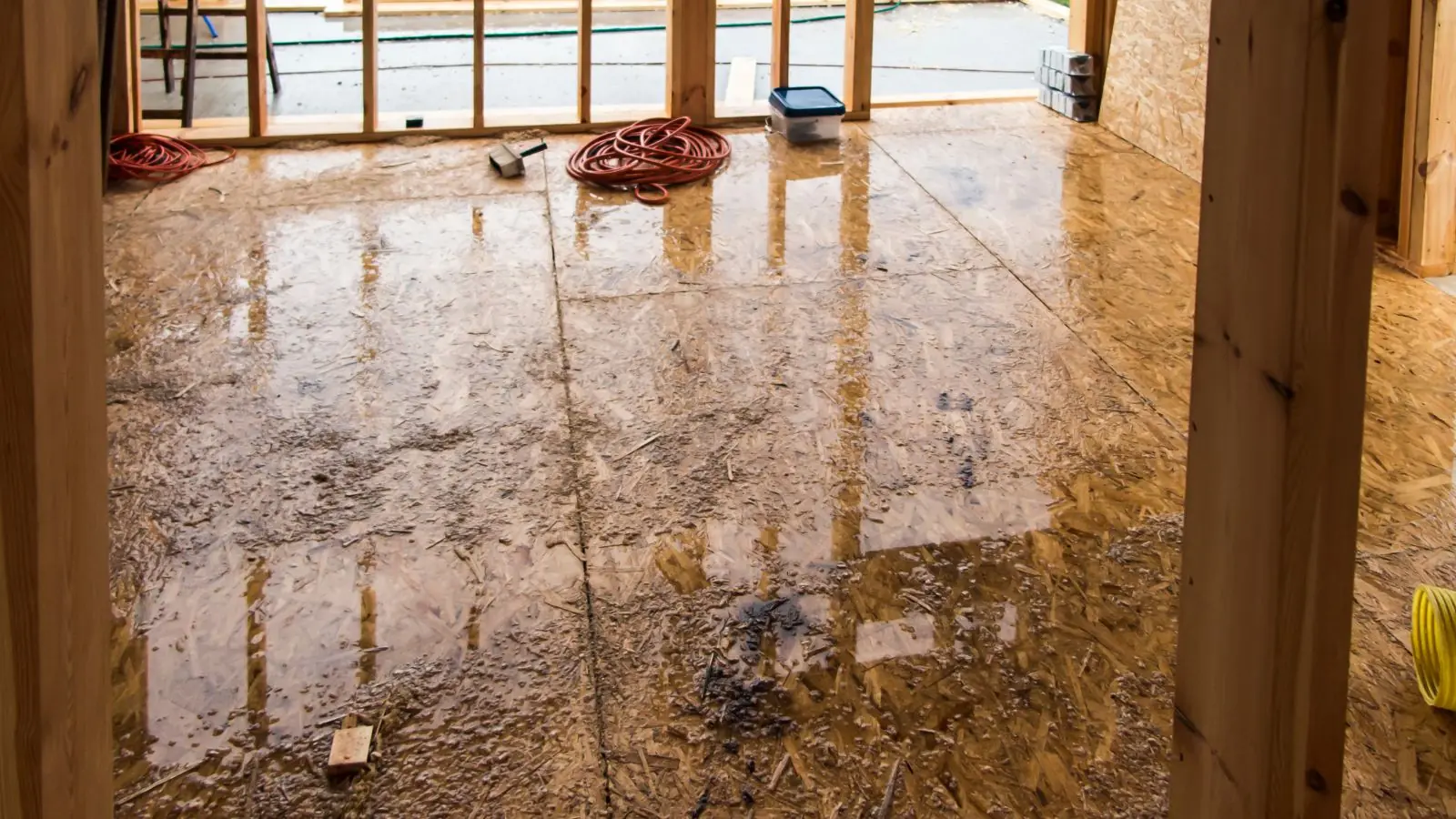
What the boards are telling you
Wood takes on water from below and from the sides, and it swells as it does. The shape of the swelling tells you where the moisture is and how deep it went. Reading it correctly decides whether you dry the floor or tear it up.
If water is standing on the floor now, stop the source, soak up what you can with towels and keep foot traffic off. Do not cover the boards with rugs or plastic. Call (760) 769-1159 and we will explain the next safe step, since we are open 24/7.
Symptoms, likely causes and what to do
Use this table to match what you see on your floor with the cause and the usual response. A moisture meter on the boards and the subfloor makes the final call. The ANSI/IICRC S500 standard is the published reference for how wet structures are dried.
| Symptom | Likely cause | What to do |
|---|---|---|
| Cupping, edges higher than the center | Moisture from below, such as a slab leak, wet subfloor or a long-running leak | Find and stop the source, dry the floor and subfloor, then wait before sanding. |
| Crowning, center higher than the edges | Boards sanded while still wet, or cupping that was sanded before the floor dried | Let the floor stabilize, then re-evaluate for sanding and refinishing. |
| Dark gray or black stains | Long-term moisture or tannin reaction after repeated wetting | Test the moisture, then sand. Deep stains may need board replacement. |
| White cloudy patches in the finish | Surface moisture trapped in the finish | Often fixed by buffing and recoating after the floor is dry. |
| Buckled boards lifting off the subfloor | Heavy water exposure and prolonged saturation | Remove and replace affected boards, then dry the subfloor. |
How a wood floor is dried
Drying a hardwood floor is slow on purpose. Fast heat makes the boards crack, so crews use air movers and dehumidifiers and sometimes mats that pull moisture up through the boards. This is part of our water mitigation work and it is tracked with meter readings each visit.
Boards that cup from a brief wetting can often flatten as they dry. That can take days or weeks, which is why sanding too soon is the biggest mistake. The floor must read at its normal moisture level before any sander touches it.
Sand, refinish or replace
Sanding works when the boards are flat again, stains are only on the surface and there is enough wear layer left. Engineered floors have a thin top layer, so they have fewer sandings left than solid planks. Ask which type you have before you assume.
Replace boards when they are buckled, split, soft or stained all the way through. A repair of this kind falls under water damage repair, and new boards are blended into the old ones so the line does not show. If you can, keep a few spare boards from the original install.
What La Quinta homeowners should know about empty homes and permits
Many La Quinta homes sit empty for part of the year because the city fills with seasonal residents in the cooler months. A slow leak in a vacant house can run for days before anyone sees it, and wood floors show the damage first. Put a shutoff valve and a leak sensor on the water heater, the washer and under sinks, and ask a neighbor to look in while you are away.
The City of La Quinta Building Division says work that builds, alters or repairs a structure generally needs a permit before it starts, with some exemptions. Replacing a few boards usually is not structural, but if the repair opens walls or touches plumbing, ask the Building Division first.
The first day on a wet wood floor
What you do in the first hours changes the outcome more than any later repair. Wood absorbs water quickly, and it releases it slowly. A clean, uncovered floor with moving air gives it the best chance.
Skip steam mops, wax and sealers until the floor has been checked. They trap moisture in the boards and make a clear reading harder to get. A flat floor today can still cup next week if wet subfloor is left behind.
- Stop the water and pick up standing water with towels or a wet vacuum
- Lift furniture legs off the wood and place foil or plastic blocks under them
- Pull up rugs and mats so air reaches the boards
- Run the AC to keep the house cool and the air dry
- Take photos before anything is moved
Preventing the next floor problem
Check under the kitchen sink, behind the fridge and around the water heater each season. Slab leaks and drain lines from the AC close to the floor are common, so watch for new cupping near those areas.
If your home is near Indio or Coachella, the same habits apply. When floors cup, call early. Waiting lets small moisture issues spread into the subfloor.
Not sure whether your floor can be saved? Call (760) 769-1159 and describe the boards.
Questions we hear from La Quinta homeowners
Will cupped wood floors go flat on their own?
Often they improve once the moisture source is fixed and the floor dries slowly. That can take days or weeks. Sanding too soon locks in the problem, so let the readings settle first.
How can a vacant La Quinta house protect its floors while I am away?
Close the main water shutoff before you leave for the season, or at least the valves at the water heater and washer. Add leak sensors in the laundry room and under the kitchen sink, and have someone check the house on a schedule. A leak that runs for a week in an empty house usually soaks the subfloor, not just the surface.
Can I use a heater or hair dryer to speed things up?
No. Too much heat dries the surface faster than the core and cracks the boards. Controlled airflow and dehumidification are safer.
Is engineered wood less safe than solid wood in a leak?
Not necessarily. Engineered planks swell and delaminate in standing water, while solid planks cup. Both can be saved if dried quickly, and both can fail with prolonged saturation.
Does insurance cover floor repair?
Policies often respond to a sudden, accidental event like a burst line, and often do not respond to slow leaks or neglect. Check your policy or ask your insurer, and document the damage with photos.
Water still spreading? The line is open 24/7.
Call (760) 769-1159