
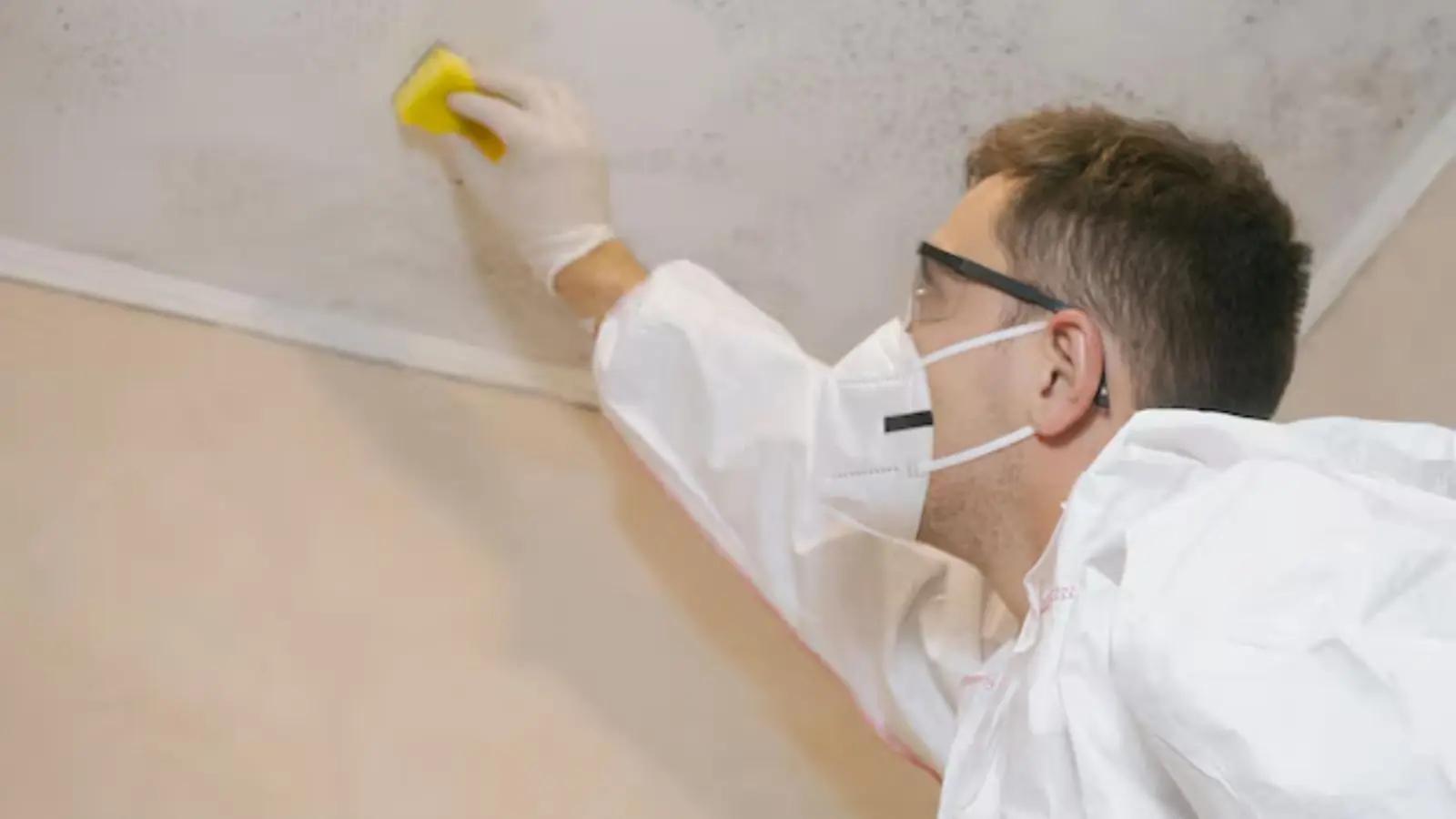
The honest answer about danger
People ask this question first, and it is a fair one. We are a restoration dispatch line, not a medical office, so we do not diagnose anything and we do not tell anyone what mold will or will not do to a person.
Questions about symptoms, sensitivities or a vulnerable family member belong to a physician. What we can help with is the part that sits in the house: the water, the materials and the work to fix them.
Four decisions that are yours to make
You do not need a lab result to make progress. These four questions are things you can look at today, and they decide who you call and in what order.
Where is the moisture coming from?
Mold needs moisture. A roof leak, a plumbing line, an AC drain or a window seal is the source, and until it is fixed, cleaning only buys time.
How big is the area?
The EPA says a homeowner can often clean hard surfaces under about 10 square feet. Anything larger, or anything in drywall, carpet or insulation, calls for professionals.
How long was it wet?
The EPA says drying wet materials within 24 to 48 hours usually prevents growth. If the water sat longer, measure before you assume the worst or the best.
Who needs to be involved?
A plumber for the leak, a restoration crew for drying and remediation, your insurer for coverage questions and a physician for health concerns.
What La Quinta homeowners should know about empty homes
Many houses here sit empty for part of the year, because the city's population rises in the cooler months with seasonal residents. If a supply line, a water heater or an AC drain leaks in a home nobody visits, it can run for days before anyone sees it. That is long enough to pass the 24 to 48 hour window the EPA cites for drying wet materials.
So the first look at a closed-up house deserves a flashlight and your nose. Check closets, under sinks and around the water heater first.
Think about the homes in The Village, around PGA West, in Griffin Ranch or near SilverRock Resort that close for a season. A shutoff valve for the main line, a leak sensor near the water heater and a neighbor who checks the door are low effort. They matter far more than a mold test taken after a leak has already run.
Testing versus remediation
Testing tells you whether and what kind of mold is present. It does not dry anything, remove anything or repair the leak that caused it. In many cases, visible growth plus a known water source is enough to start the plan.
Remediation is the physical work. Under the ANSI/IICRC S520 standard, crews contain the area, run HEPA air scrubbers, use negative air, remove materials that cannot be cleaned and dry the structure. The EPA does not recommend routine bleach as a biocide, and bleach must never be mixed with ammonia.
If you want testing for a real estate or insurance reason, hire an independent tester so the person measuring is not the person selling the cleanup. Ask whether your state licenses mold work before you hire anyone.
Quick table: what you see and who to call
This is a sorting guide for the first phone call.
| What you see | First call | Why |
|---|---|---|
| Active leak or standing water | Restoration crew via the 24/7 line | Water must be stopped and removed first |
| Small spot on a hard surface, source fixed | You, with care, or a crew if unsure | Often a cleaning job under the EPA size guidance |
| Growth on drywall, carpet or ceiling | Mold remediation crew | Porous materials usually need removal |
| Musty smell with no visible source | Restoration crew with moisture meter and thermal camera | The moisture is likely inside a cavity |
| Any concern about symptoms | Your physician | Health is outside what we can answer |
Taking the next step
Fix the leak first, keep the area closed off and photograph what you see. Do not sand, scrub or run a fan across visible growth. Find your main water shutoff now, before you need it.
If you want a second set of eyes, the process is covered under mold remediation, and the drying side is water mitigation. Homeowners in Rancho Mirage and Indian Wells, where many homes sit inside gated communities, often have an HOA to notify as well.
Call (760) 769-1159 and tell us what you found and how long it has been there.
Questions we hear from La Quinta homeowners
So is the mold in my house dangerous or not?
That is a health question, and it belongs to a physician. A restoration company can tell you where the moisture is, how big the affected area is and what the work involves, but it cannot diagnose anything.
Do I need a mold test before I call a remediation company?
Not necessarily. If you can see growth and you know the water source, remediation can often be planned without a lab result. If you want testing for a sale or a claim, use an independent tester.
Can I clean it with bleach?
The EPA does not recommend routine bleach as a biocide, and bleach must never be mixed with ammonia. Small areas on hard surfaces are often cleaned with detergent and water. Anything larger than about 10 square feet should be handled by professionals.
I came back to my La Quinta house after the summer and it smells musty. What do I do?
Start with the likely sources: the water heater, the AC drain pan, the sinks and the roof. Look for stains, a wet closet floor or a pan full of water, and check your water meter. If you find moisture, call a crew quickly because the 24 to 48 hour drying window has probably passed.
Will insurance cover mold remediation?
It depends on the cause and the wording of your policy. Insurers generally treat a sudden break differently from a long-running drip, so the cause of your loss matters. Check your policy and ask your insurer before the work starts.
Water still spreading? The line is open 24/7.
Call (760) 769-1159