
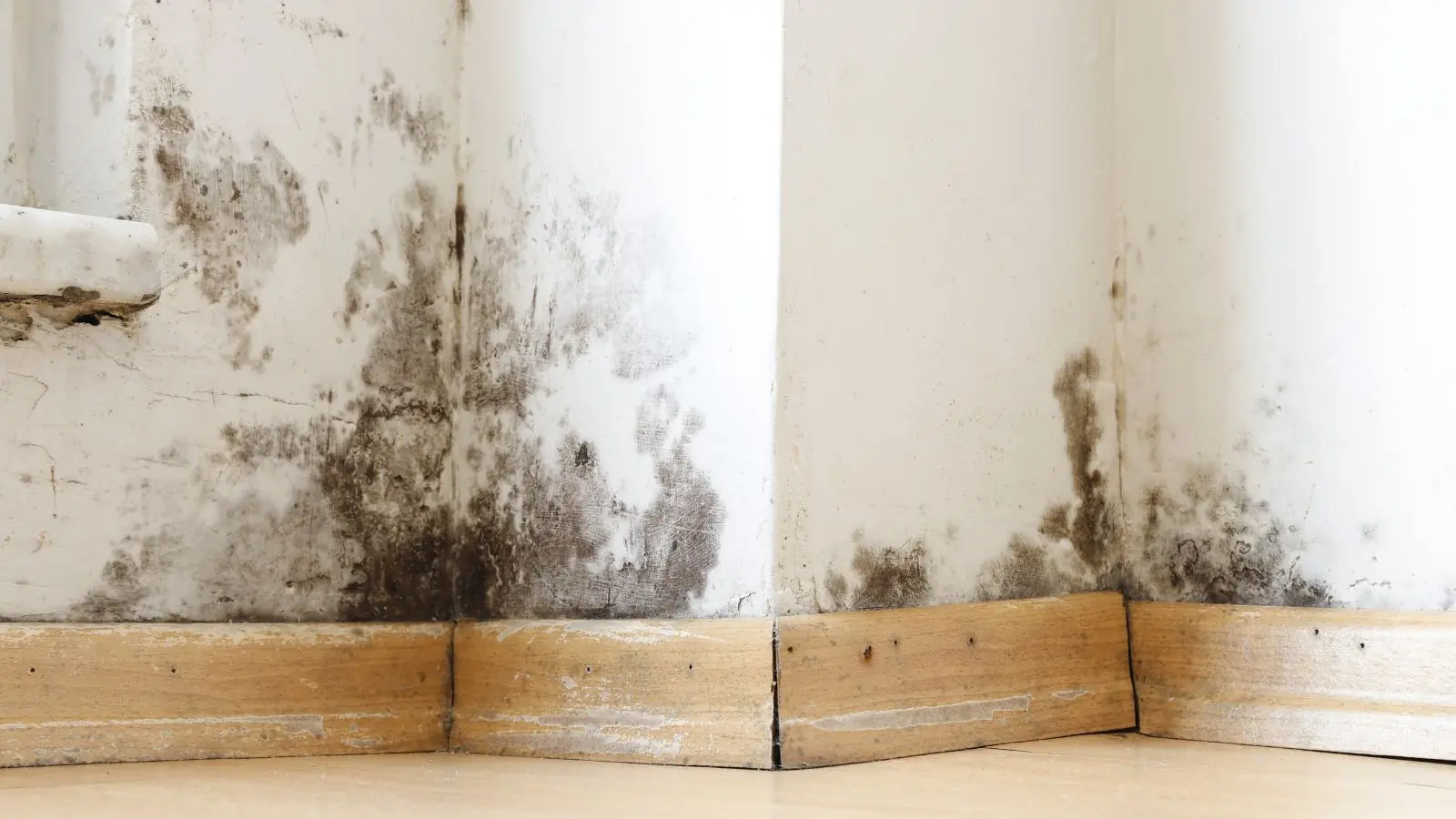
Why closets grow mold after a leak
A closet is a small box with little airflow. Clothes, boxes and shelving block the walls, and the door stays shut most of the day. If a leak wets the floor or wall and nobody opens it up, the moisture sits there with nothing to carry it away.
Mold needs moisture to grow, so the real question after any closet leak is how long the materials stayed wet. The dry fix comes first, and the cleaning comes second.
Four closet leaks we see most
Most closet mold traces to one of a few sources. Knowing which one you have tells you where the wet material hides.
Wet carpet and pad
A pipe leak or overflow soaks the carpet, and the pad underneath holds water against the slab and the bottom of the wall for days.
The AC closet
A clogged condensate line spills over the pan and wets insulation, the floor and the lower drywall.
A shared wall with a bathroom
A shower valve, supply line or toilet connection leaks inside the wall, and the damp shows up first as a stain or odor on the closet side.
Roof or window seepage
A slow leak runs down an exterior wall and wets the top shelf and the drywall corner above it.
What La Quinta homeowners should know about timing
The EPA says mold needs moisture, and that drying wet materials within 24 to 48 hours usually prevents growth. That window is short, so if a closet wall or floor has been wet for longer than two days, treat it as a mold risk and have it measured instead of waiting to see what appears.
The EPA also notes that small areas under about 10 square feet can often be cleaned by a homeowner on hard surfaces, while larger areas call for professionals. Measure the wall before you decide which group you are in.
Heat makes the AC closet a special case here. Summer afternoons in La Quinta regularly top 100 degrees F, so the air conditioner runs for months and produces condensate daily. A closet that holds the air handler stays damp and warm if the drain line backs up, which means the 24 to 48 hour clock can run out before you even know water is present.
What is salvageable and what is not
Porous material that stayed wet is the hardest to save, and hard material that was cleaned and dried quickly is the easiest. Decisions get made after measuring, not by looking, but this table shows how they usually go.
| Item | Often salvageable? | What usually happens |
|---|---|---|
| Carpet pad | No | Removed and replaced |
| Carpet | Sometimes | Lifted, dried and cleaned if the water was clean and fast, otherwise replaced |
| Drywall with visible growth | No | Cut out past the affected area and rebuilt |
| Drywall that was wet but firm and clean | Often | Dried in place and verified with a meter |
| Wood shelving | Sometimes | Dried, cleaned and sealed, or replaced if soft |
| Plastic, metal and glass items | Yes | Cleaned and dried |
| Cardboard boxes and paper | Rarely | Discarded |
| Clothing and fabric | Often | Laundered or professionally cleaned, depending on the item |
How remediation differs from wiping it down
Wiping a spot with a cloth removes what you can see and leaves the cause behind. The wall may still be wet inside, spores are now airborne and the area may regrow. The EPA also does not recommend routine bleach as a biocide, and bleach must never be mixed with ammonia.
Professional mold remediation follows the ANSI/IICRC S520 standard. Crews set containment barriers, run HEPA air scrubbers, use negative air so spores do not drift into the rest of the house, remove what cannot be cleaned and dry the cavity before anything is rebuilt. Nothing in that process is about wiping.
What to do until help arrives
Stop the water first. Shut off the main water valve if you suspect a supply line, and turn off the AC at the thermostat if the air handler is wet. Keep the door closed to limit spread, and avoid running fans that push air from the closet through the house.
Photograph everything before you move it. Take items out only if they are dry and you can do so without disturbing visible growth, and bag anything questionable for later review. Questions about health belong with your physician, not with a restoration company.
Neighbors in Indian Wells and Palm Desert call about the same pattern. Once the wall is open and dry, the rebuild falls under water damage repair. Call (760) 769-1159 and tell us where the closet sits and when the leak started.
Questions we hear from La Quinta homeowners
How long can a closet stay wet before mold is likely?
According to the EPA, materials dried inside a day or two usually do not grow mold. After that, growth becomes possible, and it depends on the material, the temperature and the airflow. If you are past two days, have the area measured.
Should I test the closet for mold before calling anyone?
Testing does not stop the moisture and does not remove anything. The first priority is to find and fix the water source, then dry and clean. If you need testing for a legal, real estate or insurance reason, ask a qualified third party and keep it separate from the company doing the cleanup.
Is it safe to clean closet mold myself?
Small hard surface areas under about 10 square feet can often be cleaned by a homeowner according to the EPA. Anything on drywall, carpet or larger than that is better left to professionals. For health questions, talk to a physician.
My AC closet in La Quinta smells musty but I see no water. What now?
A musty smell with a hot, working air handler often means the drain pan or the insulation has been damp. Turn the system off at the thermostat, look at the pan and the floor and check the wall base with a moisture meter. If you find dampness, call a crew before the smell becomes visible growth.
Will insurance cover mold from a leak?
Coverage depends on the cause and the wording of your policy. A pipe that burst this week and a seep that ran for months usually get very different answers from an insurer. Check your policy and ask your insurer, and document the closet before anything is removed.
Water still spreading? The line is open 24/7.
Call (760) 769-1159