
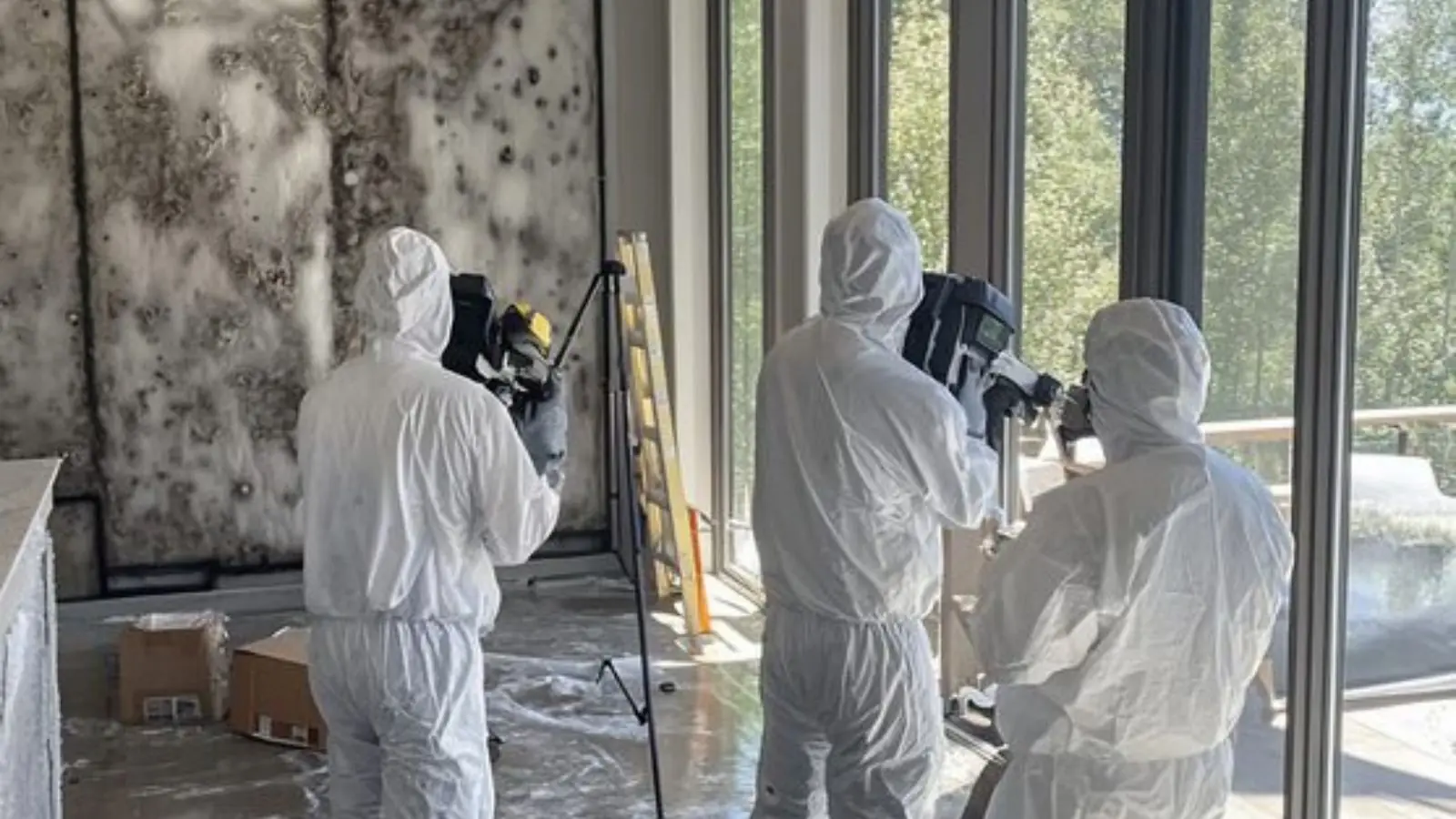
What usually happens when mold turns up in escrow
A buyer's inspector sees a stain on a garage ceiling, or a lender's appraiser notes a musty hall closet, and suddenly the deal has a new line item. Sellers panic and buyers start asking for credits. Both reactions skip the question that actually matters, which is where the moisture came from.
Mold needs moisture, and an inspection report that says mold without saying why is half a document. Fixing the water source comes first, because a clean wall over a wet one just resets the clock.
Inspection, remediation and clearance are three separate jobs
An inspection or assessment looks for moisture and visible growth and may take air or surface samples. Remediation is the physical work of removing and containing affected material, and it follows the ANSI/IICRC S520 standard. Clearance is a second look, after the work, to see whether the area meets the goal set in the written scope.
The person who does the clearance should not be the company that did the remediation. A clearance tester who has nothing to sell you gives a buyer, an agent or a lender a document worth reading. Ask whether your state licenses mold work and whether the tester carries their own credentials, since rules differ.
The order of operations, stage by stage
Skipping a stage is the most common reason a sale stalls twice. A repair invoice, a remediation completion letter and a clearance report each answer a different question from the other side of the table. The table below shows who handles each step and what proof it produces.
Whether a particular lender, buyer or agent accepts any of these documents is their decision, and no company can promise it. What you can do is hand over a clean paper trail.
| Stage | Who does it | What proof results |
|---|---|---|
| 1. Find and fix the moisture source | Plumber, roofer, or AC technician | Repair invoice and dry readings from a moisture meter |
| 2. Assess the mold | Independent inspector or indoor environmental tester | Written assessment with affected areas mapped and lab results if samples were taken |
| 3. Remediate | Mold remediation contractor working to S520, see mold remediation | Written scope, containment photos, a completion letter |
| 4. Clearance testing | A tester independent of the remediation company | Post-work lab results and a written clearance report |
| 5. Rebuild and finish | General contractor, with a permit when required | Permit sign-off if one was issued, plus invoices |
What clearance testing actually means
Clearance is a comparison, not a magic stamp. A tester inspects the work area, checks that the moisture is gone, and may collect air or surface samples to compare with a baseline such as outdoor air or an unaffected room. The report states what was sampled, where, and what the lab found.
A passing result describes that room on that day. It says nothing about future leaks, which is why the repair invoice for the water source belongs in the same folder. Keep every page together, because a buyer's agent will ask for them in one packet.
What La Quinta sellers and buyers should know
The California Department of Insurance says standard homeowners policies do not cover flood damage, and flood coverage is a separate policy, mostly through the National Flood Insurance Program, which generally takes effect 30 days after purchase. If mold in a house you are buying came from a storm or runoff, the cause matters to coverage. Ask your insurer which policy responds, and do it before you close rather than after.
Many homes in The Village and the resort communities around it are second homes that sit closed up for months. A leak there can run for weeks before anyone walks in, and a buyer's inspector may be the first person to open the garage or hall closet all season. If you sell a seasonal home, shut the water off at the main when you leave and have someone look inside regularly.
Rebuilding after clearance
Once the area is cleared, drywall, flooring and cabinets go back in. Ask the City of La Quinta Building Division whether the rebuild needs a permit, since walls, plumbing and electrical work often do. Unpermitted work can raise its own questions during a sale.
If the mold traced back to a larger loss, the repair side is covered by water damage repair, and the drying before it by mitigation crews. Homeowners in Rancho Mirage and Indian Wells often work through this with a listing agent already involved, which helps keep the schedule realistic. Call (760) 769-1159 and tell us what the inspector wrote down.
Questions we hear from La Quinta homeowners
Who pays for mold testing and remediation in a sale?
That is negotiated between buyer and seller and handled by the purchase contract, so ask your agent or a real estate attorney. Neither a remediation company nor a tester can decide it for you. Get the scope and price in writing before work starts.
Can I clear my own house to save time?
You can ask for sample results from whoever you like, but a buyer or lender will usually give more weight to a tester who has no stake in the repair. Hiring a separate party is normal practice.
Do I need clearance testing for a very small area?
Not always. EPA guidance says a homeowner can often clean a small hard-surface patch, around 10 square feet or less, after the moisture is fixed. If a buyer or lender specifically asked for testing, or the growth sits in a wall cavity, treat it as a larger job.
Will the lender accept a clearance report?
We cannot speak for any lender, and nobody honest can. Ask your loan officer what documents they want before you pay for any of the steps, and give them the repair invoice and clearance report together.
My La Quinta house sat empty all summer. What should I check before listing it?
Walk the house with a flashlight and look at the water heater closet, AC closet, garage ceiling and under each sink. Summer AC runs hard in the desert, and a clogged condensate line can drip into a closet unnoticed. If anything feels damp or smells musty, have it assessed before photos go online.
Water still spreading? The line is open 24/7.
Call (760) 769-1159