
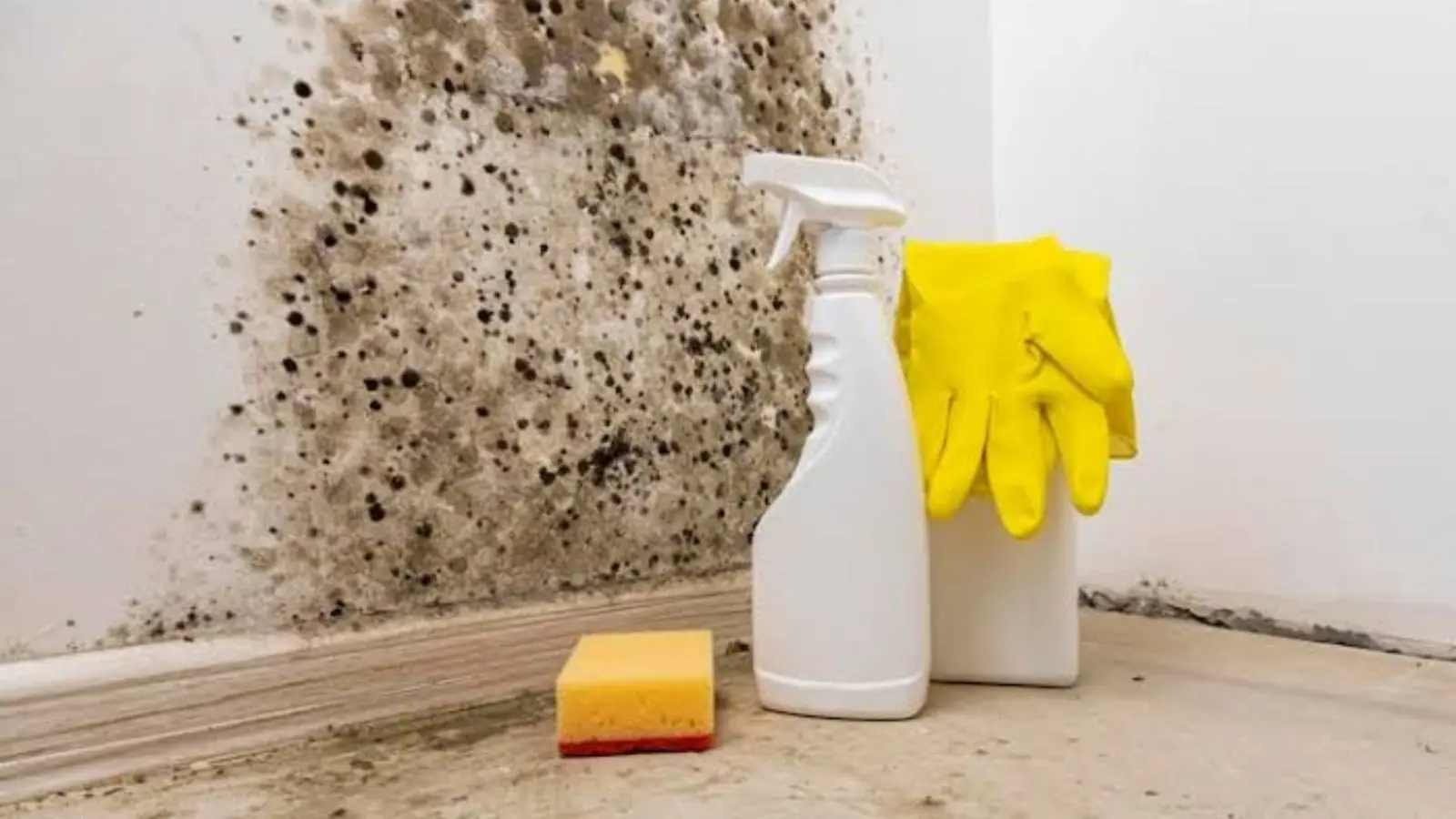
Why the cabinet under the sink goes bad first
A sink cabinet is a closed box full of pipes with almost no airflow. A weeping drain trap or a sweating supply line can drip a few ounces a day onto particleboard, and nobody opens the doors to look. By the time you smell something musty, the cabinet floor has often been damp for weeks.
Mold needs moisture, so the leak is the real problem and the stain is only the symptom. Testing and remediation follow the ANSI/IICRC S520 standard, and any question about how mold affects a person belongs with a physician. Your first job is to stop the water and keep the cabinet from staying wet.
Five spots to check before you pull anything out
Empty the cabinet onto a tarp or old towels and bring a flashlight. Run a dry fingertip along each part and look for a bead of water, a chalky white crust, or green corrosion. Run the faucet and the disposal for a full minute while you watch, because some leaks only show up under load.
If you cannot find the source or the cabinet floor is already soft, shut the angle stops under the sink or the main water shutoff and call (760) 769-1159. We are open 24/7 and can map the moisture with a meter and a thermal camera before anyone starts cutting.
- The drain trap and slip nuts. A loose nut drips only while the sink empties, so watch it during a drain cycle.
- Supply lines. Braided lines corrode at the fitting and plastic ones crack at the nut.
- Angle stops, the little shutoff valves on the wall. Crust on the stem means a slow weep behind the handle.
- The back wall. Press a screwdriver tip into the drywall behind the pipes. Soft or crumbly means it stayed wet.
- The cabinet floor. Swollen, bubbled or crumbling particleboard near the pipe opening is the classic sign.
What gets removed and what can stay
Porous materials soak up water and hold it. Hard, sealed materials mostly shed it. That difference decides almost every call under a sink.
Bag anything you remove in heavy plastic before carrying it through the house, and keep the bag away from the AC return. Photograph each stage before it goes in the trash, since your insurer may ask for the pictures.
| Material | What it looks like | Usual decision |
|---|---|---|
| Particleboard cabinet floor | Swollen, bubbled, crumbling at the edges | Remove and replace |
| Plywood or solid wood face frame | Surface staining, firm when probed | Dry fully, then have it assessed before deciding |
| Drywall behind the pipes | Soft, stained, or damp on a moisture meter | Cut out past the wet edge |
| Baseboard and flooring edge | Cupped boards or a dark line at the wall | Remove the affected run, as in water damage cleanup |
| Metal or plastic pipes | Water stains only | Replace the failed part and wipe the rest |
| Stored cardboard, sponges, paper | Damp or spotted | Discard |
What La Quinta homeowners should know
La Quinta incorporated in 1982, and the Census counted about 23,700 residents in 2000 and 37,500 in 2010. Most homes here date from the 1990s onward, which puts original supply lines, angle stops and faucet connections at 20 to 35 years old. Replace braided lines and old stops during the repair instead of reusing them, because a fitting that has already failed once is a poor bet to keep.
If the cabinet or plumbing needs replacing, ask the City of La Quinta Building Division whether a permit applies first. Swapping a faucet is one thing, while moving plumbing or rebuilding a wall is another. Ask the Building Division before you or a contractor begin plumbing or cabinet work so nothing has to be redone later.
When the cabinet itself has to be replaced
Replace the whole base cabinet when the floor and side panels are swollen, when screws pull out of damp particleboard, or when the wall behind it has to be opened anyway. A box that sat wet for weeks rarely returns to its original shape. Plywood or solid wood boxes with only light surface staining can sometimes be dried, cleaned and kept.
If the countertop is bonded to the cabinet, the sink and counter come off first. That is the moment to ask about a permit, and to decide whether an old vanity is worth saving at all. Sudden and accidental leaks are often covered by homeowners insurance while slow ones often are not, so check your policy before you choose.
Who does what, and the order that works
Fix the leak first, since nothing else holds if water keeps arriving. Then the area gets dried and the damaged material is removed under containment, which is what our mold remediation crews set up with plastic barriers and HEPA air scrubbers so debris stays out of the kitchen. Only after that does a carpenter rebuild.
We work across La Quinta and in neighboring Indio and Palm Desert when the call comes in. Water under a sink is a small leak today and a rebuilt kitchen run next month, so call (760) 769-1159 and describe what you see.
Questions we hear from La Quinta homeowners
How long can a slow leak run before mold shows up under a sink?
EPA guidance says drying wet materials within 24 to 48 hours usually prevents growth. A slow leak never gets that window because the cabinet stays damp around the clock. How quickly growth appears depends on the material, the temperature and how much airflow the cabinet gets.
Can I wipe the cabinet down and reconnect the pipes?
If the area is small and the surface is hard, you may be able to clean it yourself after the leak is fixed and everything is fully dry. Particleboard that has swelled or crumbled is removed, not cleaned. If the growth spreads past the cabinet onto the wall, stop and call.
Do I need a plumber, a mold company, or both?
Usually both. A plumber repairs the trap, line or valve that failed, and a remediation crew handles the wet and damaged material around it. The order matters: stop the leak, dry the area, remove what cannot be saved, then rebuild.
Will insurance cover mold from a slow leak?
Coverage tends to follow the cause, since abrupt and accidental events often qualify and gradual damage often does not. Mold coverage varies a lot by policy. Check your policy and ask your insurer before work starts, and keep dated photos of the cabinet, the pipes and anything you remove.
I only live in La Quinta part of the year. How do I protect the sink cabinets?
A cabinet nobody opens for months is the easiest place for a drip to go unseen. Before you leave, close the angle stops under each sink or the main shutoff, and set a small battery leak sensor on every cabinet floor. Ask a neighbor or property manager to open the doors and look when they check on the house.
Water still spreading? The line is open 24/7.
Call (760) 769-1159