
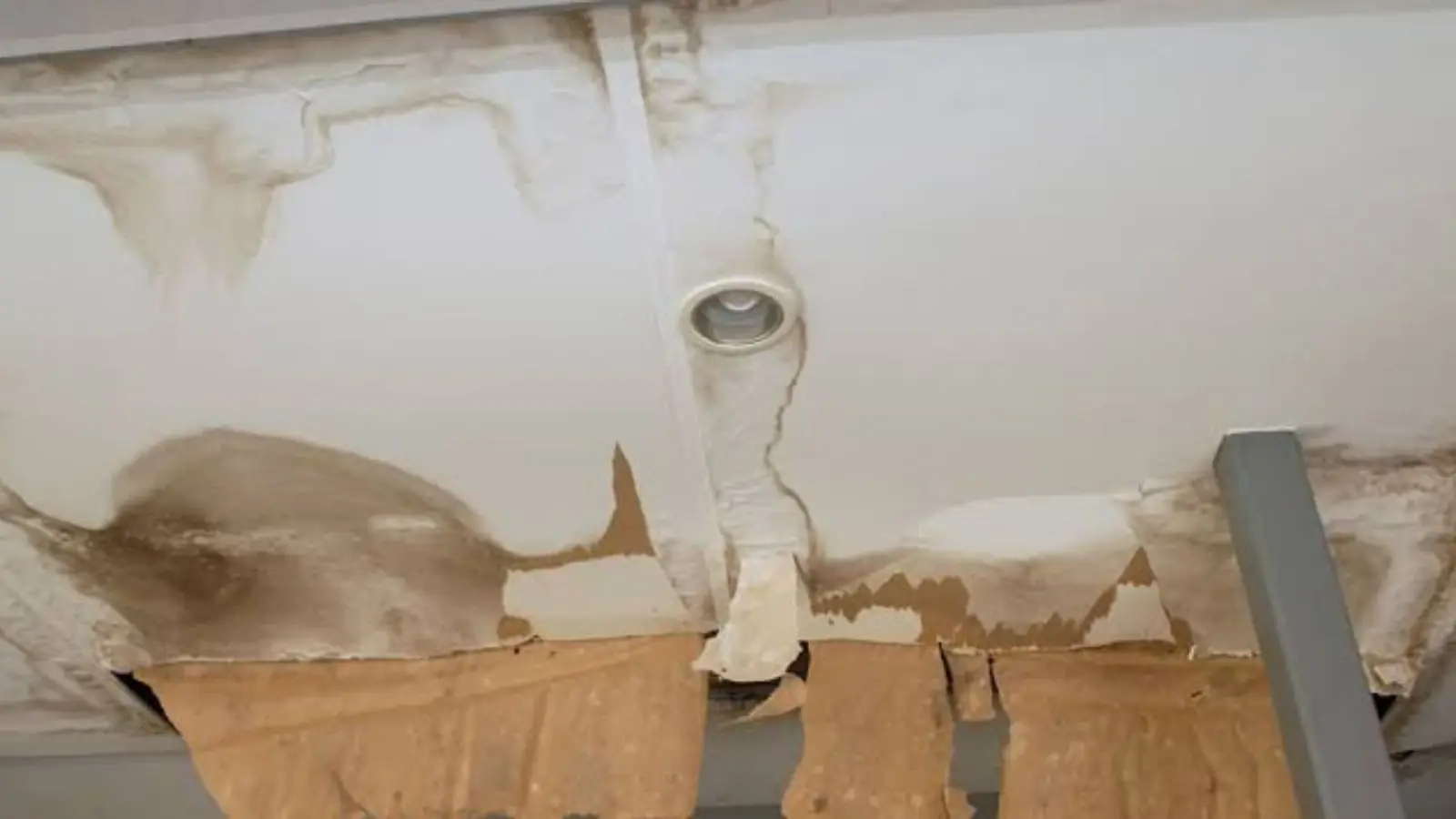
A stain is a clue, a sag is a warning
A dry, flat brown stain with a crisp edge is often old water that stopped. A stain that is damp, growing or darker in the middle means the leak is active. A ceiling that bows downward is holding water in the drywall and could drop without notice.
If it sags, do not stand under it. Move furniture and people out of the room, and if you can do it safely, poke a small hole at the lowest point of the bulge into a bucket to release the water. Then call (760) 769-1159, because we are open 24/7 and a sagging ceiling should not wait for morning.
Find where the water is coming from
The stain is rarely directly below the leak. Water runs along joists and pipes before it finds a gap, so the source can be several feet away. Three suspects cover most of the calls we get in this valley.
| Suspect | What it looks like | First move |
|---|---|---|
| Upstairs bathroom or kitchen | Stain below a tub, toilet or sink. Appears when someone showers or runs the dishwasher. | Stop using the fixture and close its supply valve. |
| Roof leak | Stain near an exterior wall or under the attic. Shows up after rain, sometimes days later. | Photograph it, tarp if safe, and note where the stain started. |
| AC system | Stain near a hallway air handler or closet. Appears in hot weather while the AC runs. | Turn the AC off and check the condensate drain pan and line. |
Stopping the source comes before any patching
Patching a ceiling while the leak runs is wasted money. Shut the supply valve to the suspect fixture, or if you cannot tell which line it is, close the main water shutoff and see whether the stain stops growing.
If the ceiling is wet near a light fixture, do not touch the switch. Turn power off to that area only if you can reach the panel dry and safely. Our emergency water removal crews arrive with meters that tell the difference between a stain that is dry and a cavity that is still wet.
When the ceiling has to be cut open
Cut it open when the drywall is soft, bulging or still reading wet. Wet insulation above holds water for weeks and keeps the ceiling damp. Opening a controlled section lets crews dry the cavity and see what is above.
Leave it in place when the stain is dry, the drywall is firm and moisture readings are normal. Then the repair is a stain-blocking primer coat and fresh paint. Ceiling texture needs to be matched, which is part of the finish work we handle under water damage repair.
What La Quinta homeowners should know about roofs and rain
La Quinta gets under 4 inches of rain in a normal year, so a roof leak catches people off guard. Few homeowners check their roofs when it rarely rains, and the first sign is often a ceiling stain after the first real storm. If your ceiling stains after rain, do not assume the AC or a pipe is the cause, and look at the roof first.
Most La Quinta homes were built from the 1990s onward, so roof components such as flashing and sealants are now 20 to 35 years old. Flashing around vents, chimneys and skylights is the common failure point. When you call a roofer, mention the age of the home and ask them to check those spots specifically.
What to record before anything gets opened
Photos and notes protect you later. Take wide shots of the room and close shots of the stain, with a coin or tape measure for scale. Write down the date you first saw it, whether it grew overnight, and what was running upstairs or on the roof at the time.
A moisture reading history is just as useful. When the crew logs readings on the ceiling and the framing above it, you have proof of when the area reached dry. That record answers an insurer, a buyer or a future contractor without any guessing.
- Date and time you first noticed the stain
- Weather in the previous two days
- Which fixtures or AC units were running
- Photos of the ceiling, the room above and the attic access if you can reach it safely
Repair steps once the ceiling is dry
After drying, the damaged drywall is cut back to sound material and replaced. New tape, mud, texture and primer go on, and the whole ceiling plane is repainted so the patch does not show. Skipping the primer is why stains bleed back through paint.
If insulation was wet, it is replaced. If your home is near Palm Desert or Indian Wells, the process is the same. When you are ready, call (760) 769-1159 and we will walk through what you are seeing.
Questions we hear from La Quinta homeowners
Can I just paint over a ceiling stain?
Not until you know it is dry and the source is fixed. Paint over a wet or active leak hides the problem and traps moisture. Once the readings are normal, use a stain-blocking primer before paint.
Why did my ceiling leak after a light rain in La Quinta?
Rain is rare here, so seals and flashing dry out and crack between storms. A light rain can find a gap that stayed hidden for months. A roofer should check flashing, vents and tile or shingle edges, since the stain may appear days after the rain.
How do I tell an AC leak from a roof leak?
Timing is the best clue. An AC leak appears when the system runs in hot weather and often stops when it is off. A roof leak shows after rain regardless of the AC.
Is a small ceiling stain an emergency?
If it is dry and not growing, it can wait for an inspection. If it is damp, spreading or near a light fixture, treat it as urgent and call right away.
Will insurance cover a ceiling leak?
Sudden and accidental leaks are often covered, while slow leaks and neglect often are not. Check your policy or ask your insurer, and photograph the damage first.
Water still spreading? The line is open 24/7.
Call (760) 769-1159