
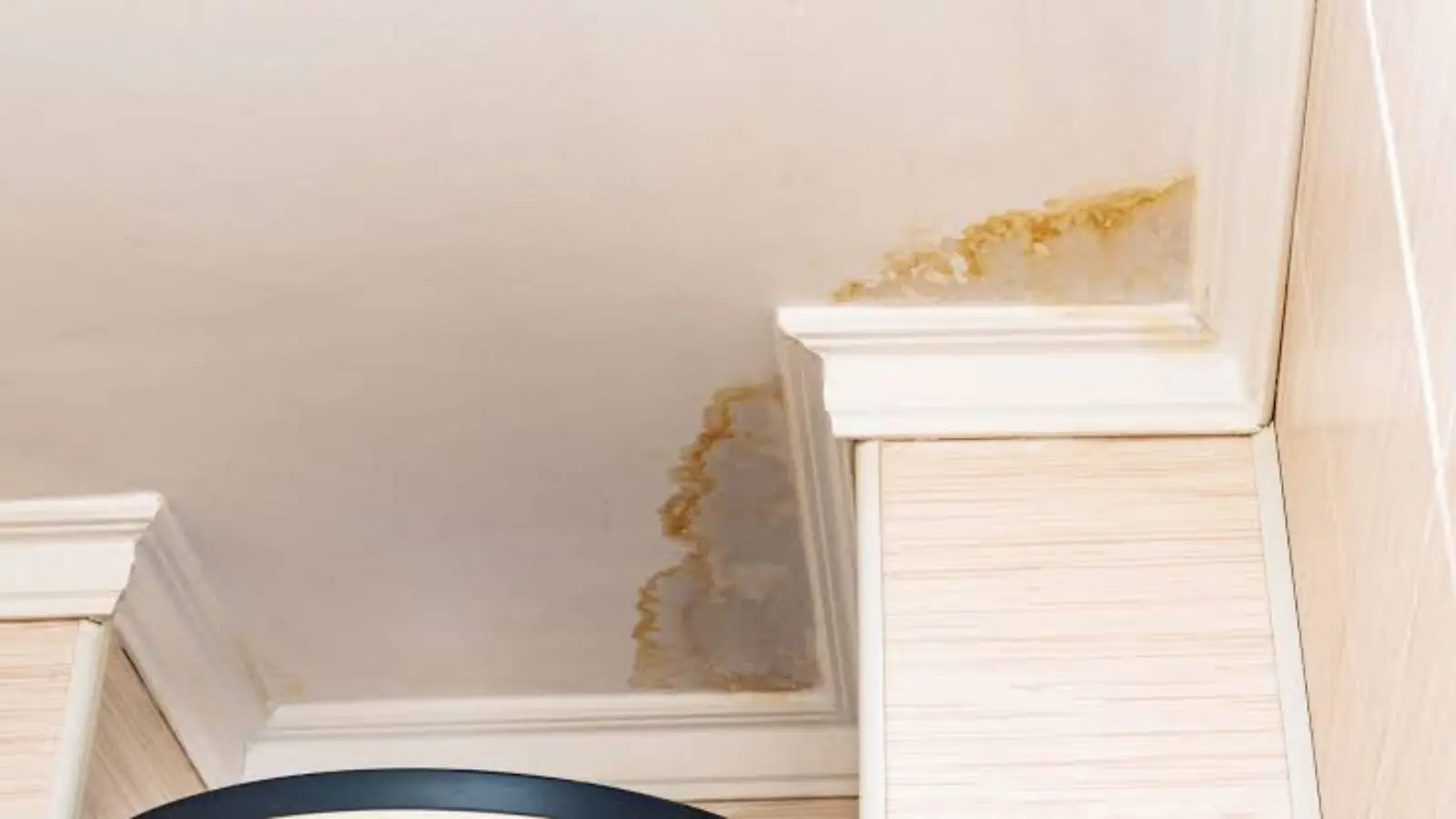
Stains, bubbles and smells: the visible clues
A wall rarely announces a leak with a puddle. It gives small hints first, and those hints are easy to paint over. If you are looking at a brown ring, a soft bubble in the paint or a smell you cannot place, read this before you pick up a roller.
Brown or yellow stains mark a spot where water has traveled through drywall and dried, sometimes more than once. A ring with a darker edge suggests repeated wetting. Paint that blisters or peels in sheets means moisture is pushing from behind the surface.
A musty odor with no stain at all often points to a wet cavity inside the wall. Your nose can pick up a problem long before your eyes can.
The quieter signs people miss
Some of the best clues are not visible from across the room. You find them by touching, listening and looking low. Walk the house slowly and check these.
None of these proves a leak on its own, but two or three together on the same wall is a strong reason to stop guessing and measure.
- A warm spot on a wall or floor that stays warm when no one is running hot water, which can mean a leaking hot line.
- Hairline cracks that follow a stain or run from the corners of door frames, especially if they are new.
- Baseboards that swell, lift away from the wall or show cracked paint along the bottom edge.
- A faint hiss, drip or trickle inside the wall when every fixture in the house is off.
- A water meter that keeps moving after you shut every faucet and appliance.
A quick table: what you see, what it means, how fast to act
Use this as a sorting tool, not a diagnosis. The urgency column tells you how quickly to move, because active water gets worse by the hour while old staining can wait for a measured look.
| What you see | Likely cause | Urgency |
|---|---|---|
| Brown ring with a darker edge | Repeated wetting from a slow supply or drain leak | Soon, check within days |
| Paint bubbling or peeling in sheets | Moisture pushing out from behind the drywall | Soon, find the source now |
| Musty smell, no visible stain | Wet insulation or drywall inside the cavity | Soon, measure the wall |
| Warm spot on wall or floor | Leaking hot water line, possibly under the slab | High, shut off water and call |
| Hairline cracks near a stain | Drywall swelling and drying, or settling plus moisture | Medium, watch and measure |
| Swollen or lifting baseboard | Water wicking up from the floor or wall bottom | High, wet material is spreading |
| Hissing or dripping inside the wall | Active pressurized or draining leak | Immediate, shut off the main |
What La Quinta homeowners should know about older walls
Most of the city's homes were built after incorporation in 1982, as Census counts climbing from about 11,200 in 1990 to 37,500 in 2010 show. Most houses here date from the 1990s onward, which puts original supply lines, roof flashing and AC components at roughly 20 to 35 years old. That is the age when a pinhole or a failed fitting starts to show up inside a wall, so an unexplained stain deserves attention sooner rather than later.
Water heaters are the other age marker. The U.S. Department of Energy says storage tank water heaters are generally designed to last about 10 to 15 years, so an original tank in a 1990s garage or closet is past its expected life. If a stain or soft baseboard sits on a wall near the water heater, look at the tank base and its connections before you look anywhere else.
Confirming it with a moisture meter
A moisture meter turns a hunch into a number. Pin meters push two small probes into the surface, and pinless meters scan through it. Either way, the reading only means something when you compare it with a dry wall in the same room, because drywall, plaster and wood each read differently.
Restoration crews pair the meter with a thermal imaging camera, which shows cool, wet areas behind paint without cutting anything open. They then map the wet zone and decide where to dry. That mapping step is the heart of water mitigation, and it keeps you from tearing out wall that was never wet.
A homeowner meter is fine for a first look. If the numbers are high, do not wait for a second opinion before you stop the source.
What to do the moment you spot a sign
Start by finding out whether the water is still moving. Shut off the main water valve if you hear a hiss or see the meter running, and turn off power to a wet area only if you can reach the panel while standing dry. Photograph the wall, move furniture and valuables away, and keep people and pets off any wet floor.
Do not paint, caulk or cut into the wall to see what happens. That seals moisture in or spreads it. We are open 24/7, and the same steps apply whether your house is in La Quinta, in Indio or in Palm Desert.
Once the wall is dry and the leak is fixed, rebuilding is a separate step. Patching, texture and paint are covered under water damage repair, and your policy may treat a sudden leak differently from a slow one, so ask your insurer before you decide.
If the stain is growing or the wall feels damp, call (760) 769-1159 and describe what you see.
Questions we hear from La Quinta homeowners
Can I just paint over a water stain?
Paint will hide the color, but it does nothing about the water behind it. Stain-blocking primer over a wet wall usually bubbles again within weeks. Find the source, dry the wall, confirm it with a meter, and only then repaint.
Does a high moisture meter reading always mean a leak?
No. Meters can read high near tile, plumbing walls, exterior walls after irrigation overspray or in a humid room. That is why the reading should be compared with a dry wall in the same room and then checked with a second method such as thermal imaging.
My La Quinta house was built in the 1990s. Should I worry about the pipes inside the walls?
Age alone is not a leak, but components that are 20 to 35 years old do fail. The water heater and its connections are the first thing to inspect, and a wall near it is the first place to look when you see a stain. A leak sensor on the floor next to the tank is a cheap early warning if you travel or leave the house empty.
Will insurance cover water damage inside a wall?
In general, a sudden failure is the kind of loss policies tend to cover, while wear and ignored leaks are the kind they tend to exclude. Flood damage is usually excluded and needs a separate flood policy. Check your policy and ask your insurer, and keep photos of the wall and any meter readings.
How soon should a stained wall be checked?
If the stain is new, growing or damp to the touch, check it today. If it is old and dry, schedule a measured look within days rather than months, because an old stain can sit over a leak that has started again.
Water still spreading? The line is open 24/7.
Call (760) 769-1159