
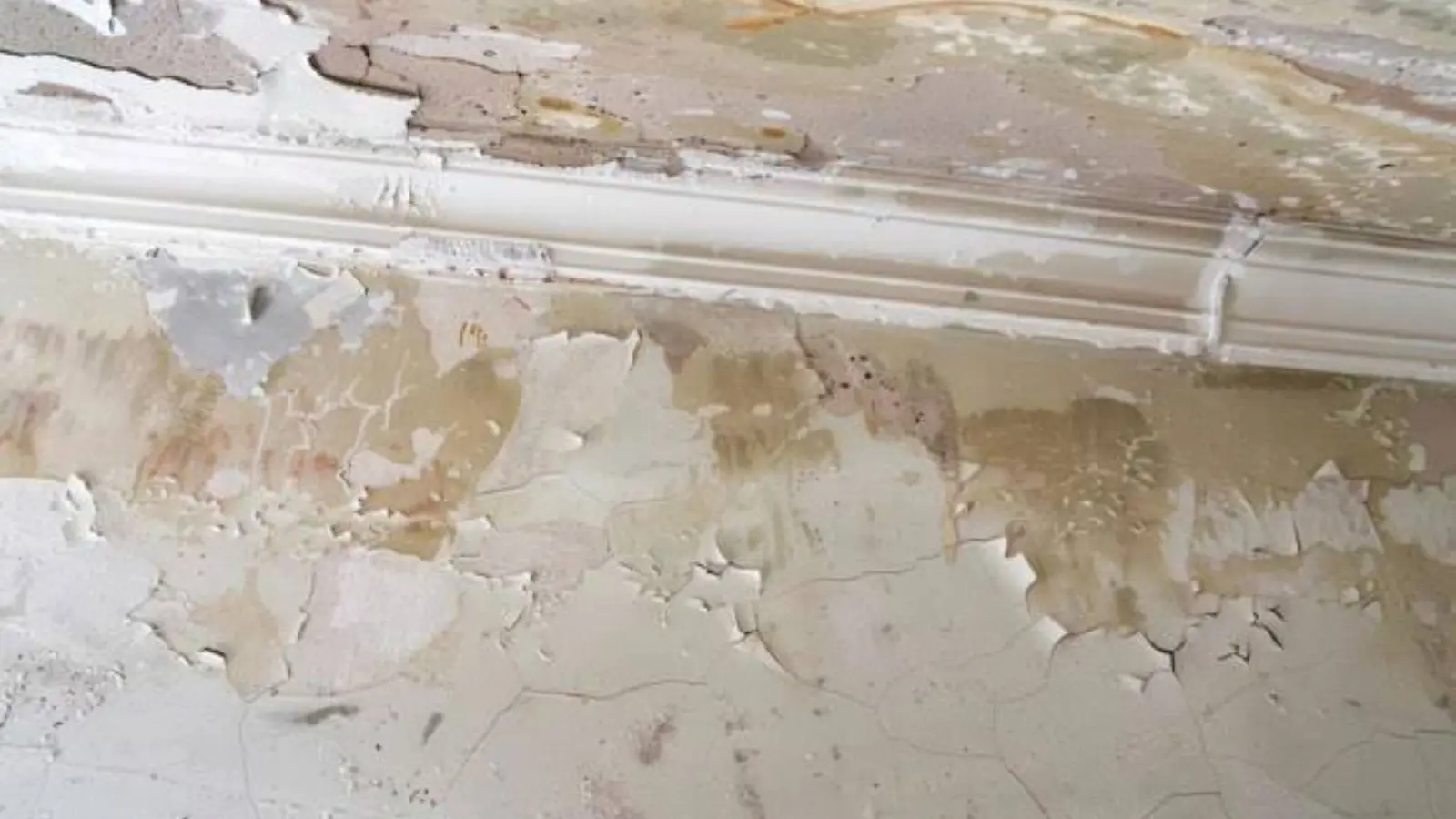
Signs that water is behind the wall
Walls hide leaks well. By the time paint bubbles or a stain shows, water has often been inside the cavity for a while. The signs are usually small and easy to dismiss.
Press on the wall with your palm. Soft, cool or crumbly drywall means it has absorbed water. If you see active dripping, shut off the main water, and call (760) 769-1159 because we answer 24/7.
Paint, drywall and baseboards: what each one shows
Paint bubbles when moisture pushes it off the surface, usually from the back. Cutting a bubble open and finding damp paper or powder behind it is a sign the drywall is wet. Brown rings or streaks mean the water has come and gone more than once.
Baseboards swell, curl or separate from the wall at the bottom. Wet drywall wicks water upward from the floor, so a damp baseboard often signals a leak at floor level, such as a dishwasher line, a toilet supply or a water heater.
- Bubbled or peeling paint: moisture from inside the wall or a high humidity source
- Soft, sagging drywall: saturated board that usually needs removal
- Swollen baseboard: wicking from a floor-level source
- Musty odor with no visible stain: wet cavity or wet insulation
- Brown tide lines: repeated wetting over time
What happens to insulation and framing
Fiberglass insulation soaks water like a sponge and holds it against the drywall and studs. Wet insulation almost always has to come out because it dries slowly and keeps the cavity damp. Framing lumber dries, but it should be metered before the wall is closed.
This is why cutting a flood cut, a straight cut about a foot or two above the wet line, is the standard step. Our water damage cleanup crews remove what is wet, dry the cavity and then leave a clean opening ready for rebuilding.
When to open the wall and when to leave it
Open it when the drywall is soft, readings are high, the wall has been wet for more than a day or two or the water was gray or black. Leave it when the wall is firm, meter readings are normal and the stain is old. A thermal camera can show a wet area behind paint without cutting anything.
Small clean-water areas under about 10 square feet can sometimes be dried and repaired, while larger or longer-lasting ones need professionals. For mold questions, see the EPA guidance and ask a physician about health concerns.
What La Quinta homeowners should know about storms and older walls
Tropical Storm Hilary in August 2023 dropped 3.82 inches in Palm Desert over two days, close to a full normal year of rain for this valley. Desert ground sheds water, so walls at ground level take runoff from outside. If a storm is forecast, shut off power if it is safe and photograph your walls beforehand so you can show what changed.
Ahead of Hilary, sandbags were available at La Quinta City Hall on Calle Tampico, at the Corporate Yard on Francis Hack Lane and at fire stations on Madison Street and Adams Street. Ask the city about sandbag locations before the next forecast storm, since stacking them at doors and garage openings keeps water off the base of the walls.
The Village area, with Old Town La Quinta and Plaza Calle Tampico, has older commercial buildings than the newer residential subdivisions. Older walls may contain plaster, older insulation and layers of paint from remodels. If you own or lease a space there, tell the restoration crew the age of the building, because it affects how the wall is opened and what is sampled before demolition.
While you wait for the crew
You can slow the damage with a few simple moves. Keep the room cool and run the AC so humid air does not settle into the wet drywall. Move couches, bookcases and boxes away from the wall so air reaches it.
Do not drill into a wall that may hold water or live wires, and do not crank the heat. Take photos of the wall before and after you move anything. Bring the photos and any notes when you talk to your insurer.
After the wall is dry
Once moisture readings are back to normal, the repair is straightforward. New drywall goes in, seams are taped and textured, baseboards are replaced and the wall is primed and painted. This falls under water damage repair, and matching texture is the part that takes skill.
If you live near Indian Wells or Rancho Mirage and the wall is part of a shared HOA structure, tell your association before demolition. When you are ready, call (760) 769-1159 and we will take it from there.
Questions we hear from La Quinta homeowners
Can I just cut out a bubble and patch it?
Only if you have confirmed the wall is dry and the leak is fixed. Patching over damp drywall seals the moisture in and the problem returns. Check with a moisture meter first.
Do I need sandbags in La Quinta before a storm?
If a storm is forecast and your home sits low or near a drainage path, yes, ask the city early. For Hilary, the city handed out sandbags at City Hall, the Corporate Yard and fire stations. Sandbags help redirect runoff but they do not replace flood insurance, which is a separate policy.
Is water damage in a Village building handled differently?
The process is the same, but older commercial walls may have different materials, so the crew needs the building age and any known renovation history. Tell your landlord or property manager before demolition.
How long does a wall take to dry?
It depends on the materials and the water source, and readings decide when it is done, not the calendar. Insulation and drywall that stay wet usually have to be removed.
Does insurance cover wall damage?
Sudden and accidental water damage is often covered, while gradual leaks and flood are often not. Your policy and your insurer have the final word on coverage.
Water still spreading? The line is open 24/7.
Call (760) 769-1159