
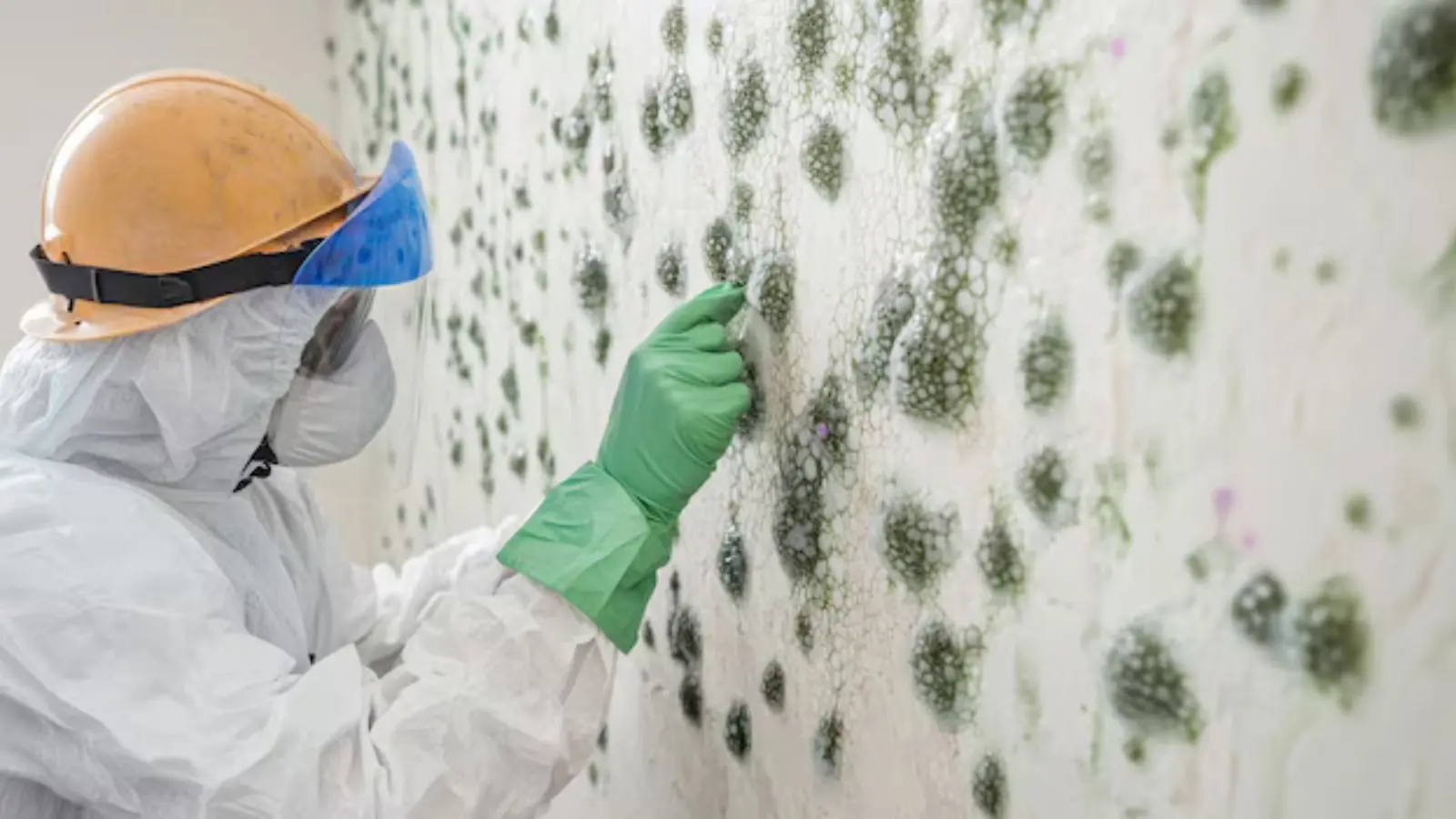
The short answer: nothing is instant
No spray, wipe or fog kills mold on contact and fixes the wall. Products can remove surface growth, but if the material stays damp, growth resumes. Removing the moisture and the affected material is what actually settles it.
Mold needs moisture, and professional work follows the ANSI/IICRC S520 standard. Keep in mind that health questions belong to a physician, not to a product label.
Black does not mean a specific mold
People search for black mold because the color looks alarming. Color is a poor identifier, since the same species can look green, gray, brown or black depending on age, food source and light. Only a lab can name a species, and the plan for the job does not change much by name.
What changes the plan is where it is, how big it is, and what it is growing on. A dark smear on a tile grout line is a cleaning task. A dark ceiling stain with a stained attic hatch above it is a leak investigation.
What is safe to use on hard surfaces
For small areas of non-porous surface, such as tile, glass, sealed countertops or metal, the standard advice is plain and boring. Wear gloves and eye protection, wipe with detergent and water, rinse, and dry fully within a day or two. Throw the cloths away in a sealed bag rather than rinsing them in the kitchen sink.
Open a window if the weather allows and keep kids and pets out of the room. Do not mix cleaners, and never combine bleach with ammonia. If the surface is porous, like drywall, ceiling tile, carpet or unsealed wood, wiping will not reach the growth.
- Good fits for a homeowner: tile, glass, metal, sealed countertops, finished fixtures.
- Poor fits for wiping: drywall, insulation, carpet and padding, ceiling tile, bare wood.
- Never pressure-spray inside the house, since it drives water and debris into the wall.
Why moisture control and removal matter more than the product
Dead or alive, mold on a porous material has to come out. Killing the surface growth does not remove stain or the material it was in, and the next damp week brings it back. That is why mold remediation crews focus on drying, containment and physical removal.
Drying wet materials within 24 to 48 hours usually prevents growth to begin with. If water is still arriving, the first call is to stop it, and the next is cleanup, which is the focus of water damage cleanup.
What La Quinta homeowners should know
Summer afternoons here regularly top 100 degrees, so the AC runs for months. A condensate drain line that clogs in an AC closet, attic or garage drips for days without anyone noticing, and the damp drywall around it is a common source of dark patches. Check the pan and drain line before summer starts.
If your AC closet floor feels damp or the drywall at its base has darkened, treat it as a leak first and a cleaning job second. Have a technician clear the line, then let the area dry before anyone wipes anything.
The EPA does not recommend routine use of bleach as a biocide, and it says never to mix it with ammonia. The strong smell makes people feel the job is done when the moisture is still in the wall. Skip it and put the effort into finding the leak.
When to stop wiping and call
Stop and call when the patch is bigger than about 10 square feet, when it is on drywall or a ceiling, or when it keeps returning after cleaning. Also call if you smell something musty but see nothing, which often means moisture inside a wall.
We cover homes from Indio to Rancho Mirage and every neighborhood in between. Call (760) 769-1159 and tell us where the dark patch is and what is above or behind it.
| Situation | What it usually means | Next step |
|---|---|---|
| Dark grout line on a bathroom tile | Surface growth from steam | Detergent and water, ventilate, dry |
| Dark ring on a ceiling under an AC closet | Condensate leak | Fix the drain line, then assess the drywall |
| Musty smell with nothing visible | Moisture in a hidden cavity | Moisture meter and thermal camera check |
| Dark patch larger than a bath towel | Likely beyond DIY | Call a remediation crew |
Questions we hear from La Quinta homeowners
Does vinegar kill black mold?
Vinegar is sometimes suggested for small hard surfaces, but no household product settles the matter on its own. Whatever you use, the moisture has to be fixed and the surface dried. For porous materials, removal is the answer, because liquid cannot reach growth that has worked into the material.
Is bleach the strongest option?
The EPA does not recommend routine bleach use as a biocide. It is also dangerous if mixed with ammonia or other cleaners. For small hard surfaces, detergent and water with thorough drying is the standard advice.
Can I tell by looking whether it is the dangerous kind?
No. Color cannot identify a mold, and only lab analysis names a species. We do not diagnose or make health claims, so any question about symptoms goes to your physician.
Should I test before cleaning?
Testing is a separate decision from cleanup. It makes more sense after a larger remediation, as independent clearance, or when a buyer or lender asks for it. For a small patch on a hard surface, finding the leak does more than a test, and the money is better spent on the repair.
Why do I keep getting dark spots near my AC vent in a La Quinta house?
Cold supply air hitting warm, humid air on a surface causes condensation, and so does a duct with poor insulation or a drain pan that overflows. Have an AC technician check the vent boot, insulation and condensate line. Once the moisture is solved, the stained drywall can be cleaned or replaced.
Water still spreading? The line is open 24/7.
Call (760) 769-1159